
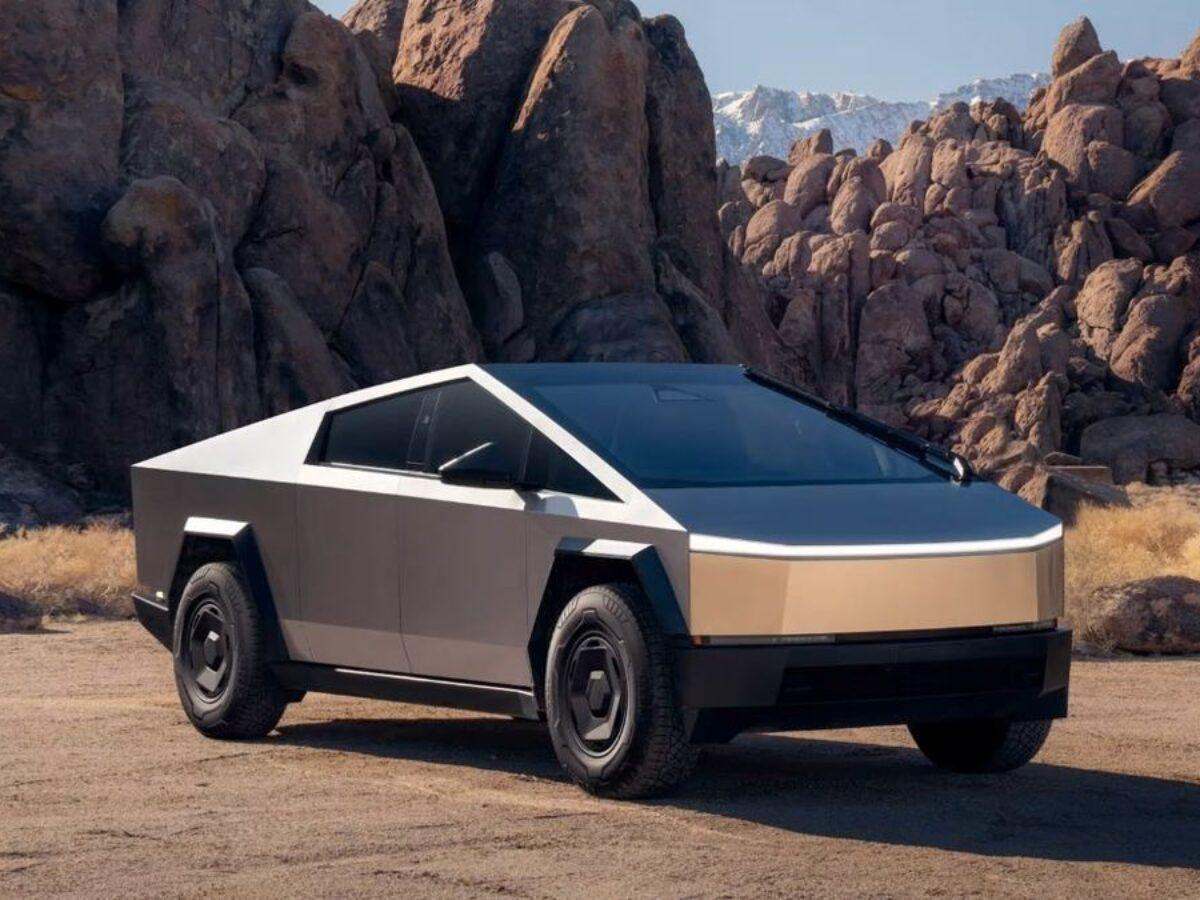
Tesla Ends Cybertruck Production After Sales Collapse and Years of Controversy
The Cybertruck was supposed to be the vehicle that changed the pickup truck market. Its sharp stainless-steel body, futuristic design and ambitious promises made it one of the most talked-about electric vehicles in years.
The Cybertruck's Fall Shows the Business Cost of Mixing Product Design With Politics
But attention did not translate into lasting demand.
Tesla CEO Elon Musk has announced that the company is winding down Cybertruck production. The final vehicles are expected to leave the production line in approximately eight months. After years of hype, controversy and disappointing sales, Tesla is preparing to move on.
The story is bigger than one unpopular vehicle. It is a lesson in what happens when a company confuses public attention with customer demand, makes promises that are difficult to deliver, and allows its brand identity to become more polarizing than its products.
From 2019 Hype to a Production Shutdown
Tesla first announced the Cybertruck in 2019, presenting it as a radical alternative to traditional pickup trucks. Its angular design looked unlike anything else on the road. Musk promoted its durability, performance and unusual capabilities.
The vehicle finally reached customers in late 2023. But the excitement surrounding its unveiling did not become a sustainable sales business.
Musk has offered several explanations for the production shutdown, including opportunity cost and the difficulty of expanding production across multiple vehicle types. He has also argued that weak sales were not the reason.
The available sales estimates tell a different story.
According to figures from Electrek and Cox Automotive, U.S. Cybertruck sales fell from 14,416 in the third quarter of 2024 to 3,519 in the first quarter of 2026. Sales recovered slightly to 3,744 in the second quarter of 2026, but remained far below the earlier peak.
That is a decline of roughly 74% from the third quarter of 2024.
For a vehicle that attracted enormous attention before launch, the numbers reveal a serious gap between curiosity and actual purchasing behavior.
The Product Had a Promise Problem
The Cybertruck's problems started before customers could even buy one.
At its 2019 unveiling, Tesla's lead designer Franz von Holzhausen attempted to demonstrate the strength of its supposedly armored glass by throwing a heavy steel ball at a window.
The glass broke.
It became an unforgettable moment, but also an early warning about the risks of making bold product claims in public.
Other promises created similar expectations. Musk said the Cybertruck would be waterproof enough to serve briefly as a boat, allowing it to cross rivers and lakes in suitable conditions.
Real-world attempts did not support the excitement. A Texas driver who took a Cybertruck into a lake had to be rescued from the situation and was arrested. Another attempt to cross a California river also ended badly. On the Oregon coast, a Cybertruck stuck on sand needed to be pulled out by another truck.
These incidents were entertaining online. For potential customers, however, they raised a more important question: could the vehicle perform reliably outside carefully controlled demonstrations?
Everyday Reliability Became a Bigger Problem
A pickup truck is not purchased only for its appearance. Owners expect it to handle difficult environments, unpredictable weather and demanding tasks.
The Cybertruck faced complaints and incidents involving basic vehicle use. Some owners reported that taking it through a car wash could cause serious electronic problems. Driving through shallow water also appeared to create difficulties for some vehicles.
Its owner's manual warned drivers to assess water depth before driving through it and noted that water-related damage could affect warranty coverage.
There were also concerns about the front trunk, or frunk, which could close with enough force to injure fingers. A YouTuber attempting to demonstrate its safety ultimately broke his own finger during a follow-up test.
None of these individual incidents proves that every Cybertruck is unreliable. But together, they created a difficult public narrative for a vehicle marketed as exceptionally tough.
The problem was not simply that the Cybertruck looked unusual. It was that its unusual design came with expectations that everyday ownership did not always appear to satisfy.
Bulletproof Marketing Met Real-World Limits
Tesla also promoted the Cybertruck's resistance to gunfire. Several public demonstrations attempted to test those claims.
Joe Rogan used a bow and arrow, while streamer Adin Ross fired a gun at the vehicle. The demonstrations suggested that parts of the body could resist certain impacts, but they also exposed weaknesses.
In one demonstration, a bullet entered through a gap between the doors. That detail became particularly embarrassing because inconsistent panel gaps had already attracted criticism.
This illustrates a broader product-marketing problem. A vehicle can perform impressively in one test and still disappoint in ordinary use. Customers do not buy isolated demonstrations. They buy the complete ownership experience.
The Cybertruck also became associated with a deadly incident unrelated to its engineering. On January 1, 2025, a man loaded one with explosives and parked it outside the Trump International Hotel in Las Vegas. The explosion killed the driver and injured seven others.
The incident was not evidence of a vehicle design failure, but it added another disturbing image to the Cybertruck's public history.
Tesla's Brand Became Part of the Problem
The Cybertruck initially attracted curiosity from people interested in new technology, unconventional design and electric vehicles.
Over time, the public conversation changed.
The source article connects the vehicle's declining popularity with Musk's growing involvement in far-right politics, his support for Donald Trump's return to the White House and his work cutting federal government programs. It also points to two gestures by Musk that were widely criticized as Nazi-style salutes.
These developments made Tesla's brand more politically divisive. Some potential customers who might once have considered buying an electric vehicle from Tesla became less interested in associating themselves with the company.
The Cybertruck, with its distinctive appearance and strong association with Musk, became an especially visible symbol of that divide.
Nicknames such as "Swasticar," "Incel Camino" and "Deplorean" circulated online. The vehicle also became a target of vandalism and arson incidents during 2025.
It is difficult to isolate exactly how much political backlash contributed to falling sales. The figures alone cannot establish that relationship. But brand perception is a commercial asset, and a company cannot assume that customers will separate its products from the public image of its leadership.
Tesla Is Moving Its Bet Toward the Cybercab
Tesla is now shifting production capacity away from the Cybertruck and toward its Cybercab project.
The Cybercab was initially presented as a two-seat autonomous vehicle that customers might eventually purchase. The source article suggests that, for the foreseeable future, Tesla's approach is increasingly likely to involve operating these vehicles in limited, geofenced areas in Texas and Florida.
That would make the business model different from selling ordinary cars.
Instead of relying primarily on individual vehicle purchases, Tesla could seek to operate an autonomous transportation service. The potential value would come from repeated rides, vehicle utilization and the ability to serve customers without a human driver.
But this is a different challenge from manufacturing an electric pickup. Autonomous vehicles must operate safely and consistently in real traffic, within the areas where they are permitted to run.
Tesla has not yet demonstrated that the Cybercab can become a commercially successful replacement for the Cybertruck. Its success remains uncertain.
The Business Lesson for Small and Medium-Sized Companies
The Cybertruck's decline offers several practical lessons for smaller businesses, especially companies launching new products or investing in emerging technology.
Do not confuse attention with demand. Social media views, press coverage and waiting-list interest are not the same as completed purchases. Businesses should measure conversion rates, repeat purchases and customer retention before expanding production.
Test the product in ordinary conditions. A product that works in a demonstration may fail when customers use it every day. Small businesses should test products with real users, in realistic environments, before making ambitious marketing claims.
Make promises that operations can support. Claims about durability, performance and reliability create expectations. If the product cannot consistently meet them, marketing can become a source of reputational damage.
Protect the brand from unnecessary polarization. A founder's public image can influence how customers perceive the company. Businesses should understand whether leadership decisions are strengthening customer trust or making the brand less attractive to important market segments.
Treat product development as a portfolio decision. Every new product consumes money, talent and management attention. Companies should compare the expected return from continuing an existing product with the opportunity to invest in something new.
For smaller companies working with AI, the same principles apply. A chatbot that attracts attention but fails to solve customer problems is not a successful product. An automation tool should be judged by the time it saves, the errors it prevents and the value customers receive.
The End of the Cybertruck Is a Warning About Hype
The Cybertruck did not fail because people ignored it. Quite the opposite. Few vehicles attracted as much attention before launch.
Its commercial problem was converting that attention into sustained demand. Sales fell sharply, reliability concerns damaged its reputation, and Tesla's increasingly polarizing brand created another challenge.
Now the company is preparing to end production and redirect resources toward autonomous transportation.
The Cybercab may offer Tesla a new opportunity, but it also faces a different set of technical and commercial risks.
For the wider business world, the lesson is clear. A bold design can win headlines. A famous founder can generate enormous attention. But neither guarantees a successful product.
Customers ultimately pay for something that works, solves a real problem and delivers value consistently. The Cybertruck's story shows what happens when the promise becomes bigger than the product.
The Cybertruck's Fall Shows the Business Cost of Mixing Product Design With Politics
Tesla Cybertruck, Cybertruck production, Cybertruck sales decline, Elon Musk Tesla, Tesla Cybercab, electric pickup truck, Tesla vehicle reliability, Cybertruck recalls, Tesla brand reputation, autonomous taxi, electric vehicle market, Tesla product strategy, EV business model, small business innovation
