
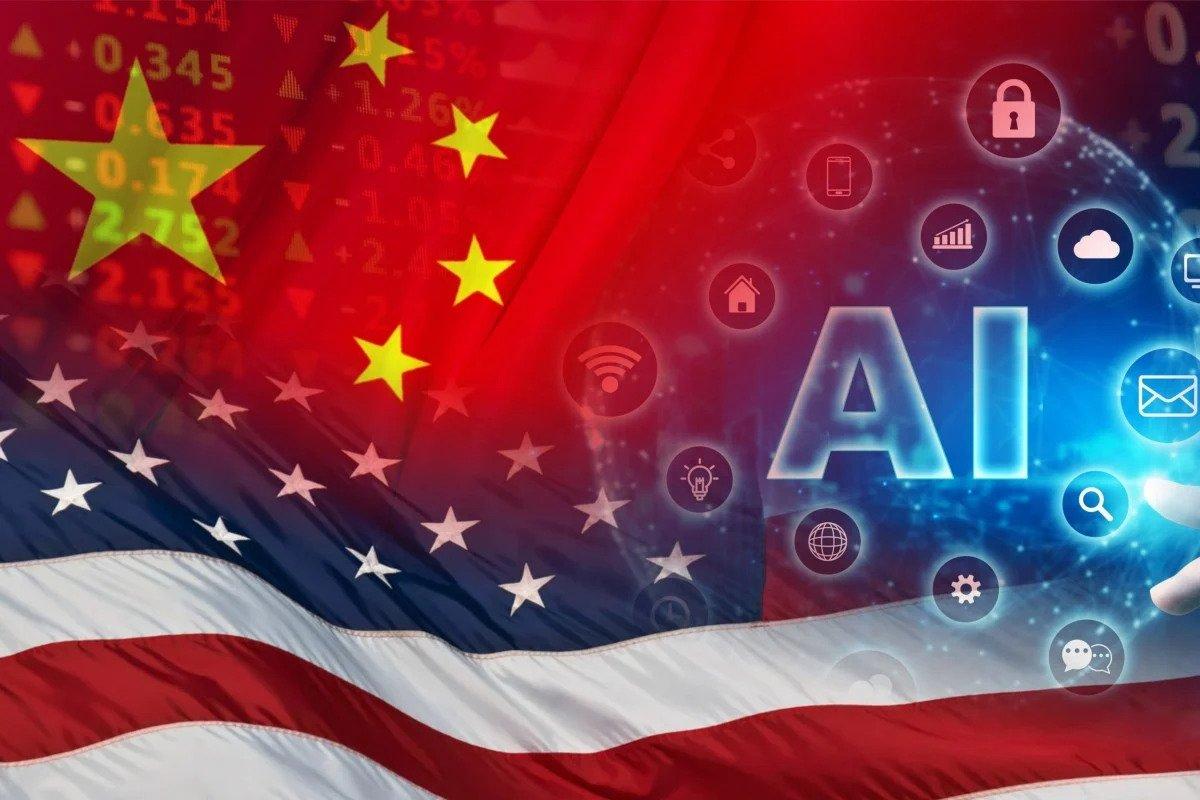
China Races to Secure Nvidia Blackwell Chips Before Washington Closes the Cloud Loophole
The next major battle in the AI industry may not be about who can buy the most powerful chips. It may be about who is allowed to use them.
Trump Administration Considers Tracking Who Uses Nvidia Chips and for What Purpose
Chinese technology companies are reportedly moving quickly to secure access to Nvidia-powered computing through overseas cloud providers. Their concern is straightforward: Washington may soon close a regulatory gap that allows customers in restricted countries to access advanced AI hardware located elsewhere.
The Trump administration is considering tighter controls on remote access to Nvidia's most advanced chips. If the proposed rules take effect, the consequences could reach far beyond China, affecting cloud providers and data center operators across Southeast Asia and several other regions.
This is becoming a contest between two different forms of power: America's control over critical technology and China's ability to find alternative routes to computing capacity.
China's AI Industry Is Looking Beyond Its Borders
According to Reuters, Chinese technology companies have been contacting overseas cloud providers to discuss access to Nvidia-powered computing.
One major Chinese cloud provider has reportedly considered reserving computing capacity from data centers in other countries. Other Chinese companies are also said to have explored similar arrangements.
The timing is important.
The reported discussions come amid growing uncertainty surrounding Nvidia's leadership and renewed scrutiny of possible chip transfers to Chinese companies through third-party providers.
One company attracting attention is Megaspeed, a Singapore-based cloud provider. Some US officials have reportedly suspected the company of helping Nvidia chips reach China illegally. Megaspeed has denied the allegations, while the Chinese government has rejected claims that Alice Huang, a former Megaspeed executive, was an intelligence agent working for Beijing.
These are allegations, not established findings. But they have intensified questions about how effectively American export restrictions are being enforced.
The Cloud Has Become a Potential Back Door
Traditional export controls focus on physical products.
Governments can restrict shipments, require licenses, investigate distributors, and prevent certain companies from purchasing advanced hardware.
Cloud computing makes enforcement more complicated.
A powerful AI chip does not necessarily need to enter China for a Chinese company to benefit from it. If the chip is installed in a data center overseas, customers may be able to rent computing capacity remotely.
In simple terms, the hardware stays in one country while the person using it sits in another.
That distinction creates a potential loophole. Restrictions on chip shipments do not automatically prevent restricted customers from accessing computing services powered by those chips.
For AI developers, remote access can be valuable because training advanced models requires enormous computing resources. Renting capacity overseas may be faster than building domestic infrastructure or waiting for alternative hardware.
Washington Is Considering a Wider Licensing System
The Information reported that the Commerce Department is finalizing a rule designed to make remote access to advanced Nvidia chips more difficult for Chinese AI developers.
Under the reported proposal, cloud providers in seven countries would need US government approval before receiving Nvidia Blackwell chips or more advanced models.
The countries named are:
-
Singapore
-
Malaysia
-
Thailand
-
Brazil
-
Indonesia
-
Norway
-
South Africa
Providers would also have to report who would use the chips and what those customers intended to do with them.
US-operated data centers would reportedly be exempt if they blocked remote access for customers in restricted countries such as China.
The proposal would therefore move export controls beyond the physical movement of hardware. It would place greater emphasis on the identity of customers and the destination of computing services.
That is a significant change in how governments approach the global AI supply chain.
Why the Timing Matters
Nvidia has been estimated to control around 90% of the market for advanced AI chips, according to the source report.
That concentration gives the company enormous influence over the computing resources available to AI developers worldwide.
For Chinese companies, losing access to Nvidia hardware could make it more difficult to train competitive models, expand AI services, and operate large-scale computing systems.
For Washington, the objective is to limit China's access to technology that could strengthen its strategic and military capabilities.
But restrictions have costs.
If Chinese companies cannot access American chips through overseas cloud providers, they may accelerate investment in domestic processors and computing infrastructure. That could eventually reduce their dependence on US suppliers.
This is the central strategic dilemma: restricting access may slow a competitor today while encouraging it to build alternatives for tomorrow.
The Political Debate Inside Washington
The original report describes growing tensions within the Trump administration over the handling of Megaspeed.
Axios reported that Treasury Secretary Scott Bessent confronted Commerce Secretary Howard Lutnick about why the company had not been formally blocked from receiving Nvidia chips. Lutnick reportedly warned that tighter restrictions could trigger a trade war with China.
The Commerce Department denied that the confrontation took place.
The report also raises questions about why an investigation into Megaspeed was allegedly halted after contact from Nvidia's general counsel. It further describes questions about the administration's response to information concerning Huang's reported relationship with Alice Huang.
The available information does not establish that officials improperly intervened or that Nvidia influenced government policy. Those questions require evidence, not assumptions.
Nevertheless, the broader issue is important. Export controls are only as effective as the institutions enforcing them.
When national security, commercial interests, and diplomatic negotiations overlap, transparent procedures become essential.
Nvidia Faces a Strategic Conflict
Nvidia has previously opposed the proposed restrictions through lobbying efforts.
Its argument is that blocking overseas access could damage American interests by encouraging China to develop its own chip industry more aggressively.
There is a commercial reason for that position. Nvidia benefits when its technology becomes the standard platform for AI development. Restricting customers reduces potential demand and may create opportunities for competitors.
But Nvidia also operates in a market where its products are considered strategically important by governments.
That creates a conflict between commercial expansion and national security policy.
The company wants its ecosystem to remain widely used. Washington wants to control where the most advanced computing capabilities can be deployed.
Neither objective can be pursued without consequences for the other.
The Weakest Point Is Enforcement
The most important weakness in the current export control system is not necessarily the absence of rules. It is the difficulty of monitoring how computing resources are actually used.
A chip can be shipped to an approved destination and still provide computing power to customers elsewhere. A cloud contract can appear legitimate while the ultimate user is difficult to identify.
A licensing system may improve visibility, but it also creates administrative costs and new questions about responsibility.
Who verifies the identity of the customer? Who monitors changes in access after a contract is signed? Who is legally responsible if a provider knowingly or unknowingly serves a restricted customer?
These questions matter under competition law and national security policy.
A government should be able to protect sensitive technology without creating arbitrary barriers that favor selected companies or punish entire markets without clear evidence. Licensing decisions need consistent standards, transparent procedures, and meaningful review.
The strongest policy will target demonstrable risks rather than assume every overseas cloud provider is a potential route for illegal transfers.
What This Means for Smaller Businesses
For small and medium-sized businesses, this dispute is a reminder that AI infrastructure is becoming a geopolitical issue.
Companies that depend on cloud computing should avoid relying entirely on one provider, one region, or one hardware ecosystem.
They should understand where their computing workloads are hosted, which suppliers control access, and whether changes in export rules could affect service availability.
Businesses developing AI products should also consider whether their technology can operate across different hardware platforms. Flexibility may cost more initially, but it can reduce the danger of being locked into a supply chain exposed to political decisions.
Cloud providers, meanwhile, will need stronger customer verification, access monitoring, and compliance procedures.
In the AI economy, infrastructure access is becoming a business risk that must be managed alongside cybersecurity, finance, and customer demand.
The Next AI Battle Will Be About Access
The proposed US restrictions could reshape how advanced AI computing is distributed around the world.
China wants access to the hardware that powers the AI race. Nvidia wants to protect its global ecosystem and commercial opportunities. Washington wants to prevent strategically sensitive computing capabilities from reaching restricted customers.
The cloud makes those objectives harder to balance because computing power can cross borders without the physical movement of a chip.
The outcome will depend not only on the final rule but also on how effectively it can be enforced.
The deeper lesson is that control over AI is no longer just about manufacturing processors. It is about controlling the infrastructure, software, customers, and networks that turn those processors into usable intelligence.
Trump Administration Considers Tracking Who Uses Nvidia Chips and for What Purpose
Nvidia Blackwell chips, China AI industry, US chip restrictions, AI export controls, cloud computing access, Nvidia cloud loophole, China AI chips, Southeast Asia data centers, remote AI computing, US China technology, AI infrastructure, semiconductor competition, cloud provider licensing, AI national security
