
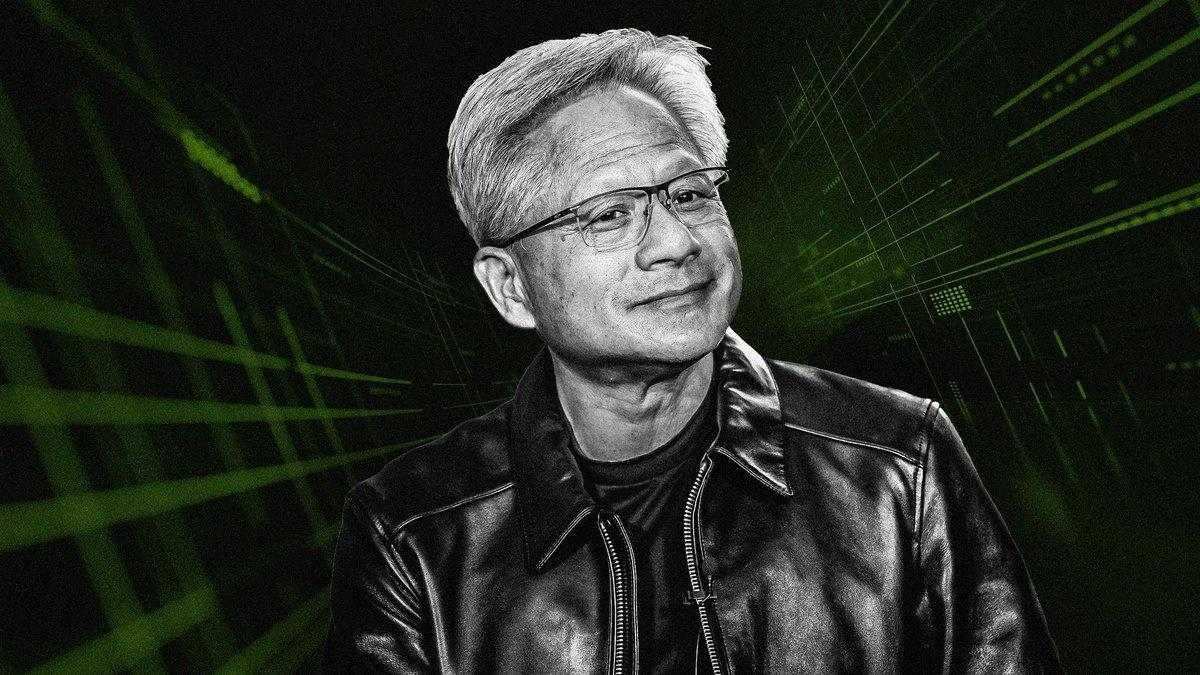
Jensen Huang Admitted Breaking Nvidia’s Rules and Put His Leadership to the Test
The most difficult corporate rules are not the ones written in employee handbooks. They are the ones leaders must follow when breaking them would be convenient.
Nvidia’s Leadership Dilemma Reveals the Hidden Cost of Corporate Double Standards
Nvidia CEO Jensen Huang has reportedly admitted violating the company’s code of conduct during his first all-hands address since returning to the CEO role. His message was unusual. The rules apply to everyone, but breaking them does not automatically mean someone must be fired. Facts, circumstances, and judgment still matter.
That sounds reasonable. But at a company where the CEO is also one of its most important strategic assets, the question becomes much more complicated. When the person responsible for enforcing the rules admits to breaking them, employees are not simply evaluating the incident. They are evaluating whether the rules still mean what they were told they meant.
The News Is About More Than Jensen Huang Breaking a Rule
Huang's remarks reportedly emphasized that nobody is exempt from Nvidia's code of conduct, including senior leadership. At the same time, he argued that a violation should not automatically result in termination.
There is a distinction between having a rule and applying it intelligently. A company should investigate circumstances, consider the seriousness of an incident, and avoid treating every mistake as equally damaging.
But this creates a delicate balance.
If an ordinary employee violates a rule and faces disciplinary consequences, while the CEO receives a more flexible interpretation, employees may begin to question whether accountability is genuinely universal.
The issue is not necessarily whether Huang should lose his job. The issue is whether Nvidia can demonstrate that the same principles apply to everyone, regardless of position, influence, or financial importance.
Corporate Ethics Are Really About Trust
A code of conduct is often treated as a legal document. Employees read it during onboarding, sign it, and occasionally revisit it when something goes wrong.
In practice, it is much more than that.
A company's ethical standards communicate what kind of behavior is acceptable, what leadership values, and whether employees can trust the organization when difficult decisions arise.
Research discussed in the original report, involving more than 2,000 workers across different industries, highlights how seriously employees view workplace ethics. According to Matt Plass of LRN, employees can feel embarrassed and angry when senior leaders fail to meet the standards expected of everyone else.
This is an important distinction. A company may not lose money immediately after a leadership controversy. It may not lose customers. Its stock may continue rising.
But trust can deteriorate quietly.
Employees may stop believing that promotions are fair, that managers are accountable, or that corporate values apply equally across the organization. Once that belief disappears, rebuilding it can take years.
The Olympics Example Shows How One Incident Can Define a Company
The original report described a company that banned corporate travel to reduce expenses. Its CEO then appeared in a VIP box at the Olympics.
The incident reportedly became a workplace example for more than a decade.
Employees used it as a reference point when discussing misconduct, effectively treating the CEO's behavior as the ultimate example of hypocrisy.
This is how corporate culture works. Employees do not remember every paragraph of a policy document. They remember the moments when leadership contradicts its own promises.
One executive's decision can become the story employees tell new colleagues. It can shape how they interpret future policies and how much effort they are willing to give the company.
The financial cost may be invisible. The cultural cost can be enormous.
Nvidia Has a Leadership Problem Most Companies Cannot Afford to Have
Nvidia is not an ordinary company dealing with an ordinary CEO controversy.
Jensen Huang is deeply connected to Nvidia's identity, strategy, engineering culture, and public reputation. His leadership is closely associated with the company's rise into one of the world's most important AI infrastructure businesses.
That creates a difficult situation.
For many companies, a serious leadership controversy can be addressed by removing the executive, appointing a successor, and communicating a new direction. But Nvidia faces a more complicated calculation because replacing Huang could introduce strategic uncertainty at a company operating in one of the most competitive technology markets in the world.
The company's dependence on his leadership makes accountability more difficult, not less important.
When a CEO becomes almost inseparable from the company, the board must balance two responsibilities. It must protect the organization from misconduct while also protecting its long-term strategic stability.
There is no easy answer. But there is a dangerous precedent if the conclusion becomes that the company's most important person is also its least accountable.
The Business Model Behind Nvidia Makes Leadership Trust More Valuable
Nvidia's business depends on more than selling powerful chips.
Its position in AI infrastructure comes from a combination of hardware, software, developer tools, ecosystem relationships, and the ability to convince customers that building on its platform is a long-term strategic decision.
That ecosystem requires people.
Engineers, researchers, managers, sales teams, partners, and customers all contribute to Nvidia's competitive advantage. The company's culture helps attract and retain the talent required to keep expanding that advantage.
In a business where technical knowledge is scarce and competition for experienced workers is intense, employee trust is an economic asset.
A leadership controversy might not immediately change demand for AI accelerators. But if it damages employee morale, weakens internal collaboration, or makes talented workers question their future at the company, the effects could eventually reach the business itself.
The strongest companies are not built exclusively on products. They are built on people who believe their work matters and that the organization deserves their commitment.
The Risk Is a CEO Exception That Employees Cannot Ignore
Huang's argument that violations should be judged according to facts and circumstances is reasonable in principle.
Not every violation deserves the same punishment. An accidental mistake, a minor procedural issue, and deliberate misconduct are different situations. A thoughtful investigation should recognize those differences.
However, the process becomes problematic if employees cannot see how decisions are made.
If the CEO's circumstances receive special treatment without transparent reasoning, employees may interpret flexibility as privilege.
That creates three potential risks:
- Cultural risk — employees may lose confidence in the company's stated values.
- Talent risk — highly capable workers may become less willing to stay in an environment they perceive as unfair.
- Leadership risk — future decisions may be judged against the precedent established by this incident.
The problem is not flexibility. It is unexplained flexibility.
Nvidia Employees May Be More Important Than Outside Investors in This Situation
Investors usually focus on growth, revenue, margins, competitive advantage, and management's ability to execute.
Employees focus on something different. They want to know whether the company they work for is consistent with the principles it claims to represent.
Huang's return reportedly followed an employee campaign supporting him. That suggests his leadership remains deeply valued inside Nvidia.
But support for a leader and acceptance of every decision are not the same thing.
Employees can admire Huang's vision, appreciate his leadership, and believe he is essential to Nvidia's success while still expecting him to follow the company's rules.
That distinction matters because employee loyalty should not be confused with unconditional approval.
The longer Nvidia operates under this controversy, the more important it will become for leadership to demonstrate that the company's standards are real rather than symbolic.
What Small and Medium-Sized Businesses Can Learn From Nvidia
Smaller companies face a version of this problem every day, often with much less protection.
In a business with ten employees, the founder may control hiring, salaries, expenses, promotions, and strategic decisions. There may be no independent board, no formal compliance team, and no dedicated human resources department.
That makes consistency even more important.
If a founder tells employees to control expenses but regularly ignores those rules personally, the message is immediate. If staff members are expected to be punctual while the owner routinely arrives late, the written policy quickly loses credibility.
A company does not need a complicated compliance system to establish accountability.
It needs rules that are clear, reasonable, and applied consistently.
What I Would Do If I Ran a Small or Micro Business
If I were running a business with five, ten, or twenty employees, I would not begin by creating a thick employee handbook. I would start with a few practical rules that everyone could understand.
Make the rules short and specific. Employees should know exactly what is expected regarding expenses, customer information, conflicts of interest, attendance, and workplace behavior.
Apply the rules to the owner. If employees cannot claim an expense, neither should the owner unless there is a legitimate exception that is documented and explained.
Separate mistakes from misconduct. Honest mistakes should create opportunities to improve. Deliberate dishonesty, abuse of authority, and repeated violations should have meaningful consequences.
Document important decisions. A small business may not have lawyers or HR specialists, but it can maintain simple records explaining why exceptions were made and how disputes were handled.
Explain exceptions openly. When circumstances require flexibility, explain the reason. Silence creates suspicion. Transparency creates understanding.
Protect employees who raise concerns. People should be able to report problems without fearing that they will lose their jobs, hours, opportunities, or relationship with management.
For a small business, these practices are not bureaucratic overhead. They are a way to prevent the company from becoming dependent on the owner's personality.
A business with fair rules can survive disagreements. A business where rules change according to who is involved will eventually struggle to maintain trust.
The Real Test of Leadership Is What Happens After the Mistake
Jensen Huang's return may ultimately prove to be a non-issue for Nvidia's workforce. Employees reportedly supported his reinstatement, and the company remains in a powerful position within the AI industry.
But leadership is not tested only when business is growing and everyone agrees.
It is tested when a powerful person makes a mistake, when the organization must choose between convenience and principle, and when the decision could affect the company's future.
Nvidia has built an extraordinary business by pushing technology forward. Its next challenge is less technical.
It must show that the culture supporting its success is strong enough to hold its own leader accountable.
Because the most expensive corporate mistake is not always the one that appears on a financial statement. Sometimes it is the moment employees stop believing in the company they helped build.
Nvidia’s CEO Returned With a Message About Ethics That Employees May Never Forget
Nvidia leadership, Jensen Huang controversy, Nvidia code conduct, corporate ethics, employee trust, workplace accountability, CEO leadership, Nvidia company culture, AI business strategy, corporate governance, employee morale, leadership transparency, small business ethics, workplace culture
