
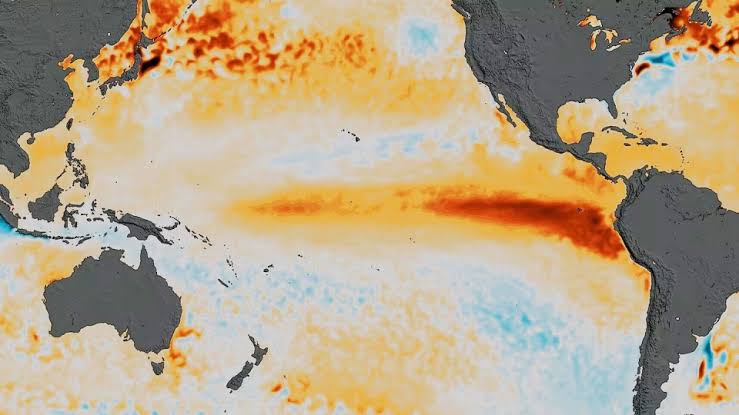
COP31 Ends in Disaster as Super El Niño Exposes the Failure of Global Climate Leadership
The world is experiencing a climate emergency, but the people responsible for coordinating a global response cannot agree on what to do.
The Super El Niño Warning That Global Businesses Should Not Ignore
That is the uncomfortable message from COP31.
As a powerful Super El Niño brings widespread weather disruptions, extreme heat, and growing threats to human health, representatives from around the world gathered in Türkiye to negotiate the next steps in climate action. The World Health Organization declared a state of emergency on the first day of the conference, highlighting the dangers of heat, extreme rainfall, wildfire smoke, malnutrition, and other climate-related threats.
The expectation was simple. Governments needed to agree on meaningful action.
Instead, COP31 ended without an agreement.
This was reportedly the first time since the Copenhagen negotiations in 2009 that a COP conference had failed to reach any kind of agreement.
The failure is bigger than a diplomatic disagreement. It exposes a fundamental problem in the global climate economy. Everyone can see the risks, but countries still disagree about who should pay, who should change, and who should give up the most profitable parts of their existing industries.
For businesses, particularly small and medium-sized companies, this creates an uncomfortable reality. Climate risks are becoming more visible, while the international political system is struggling to provide a reliable direction.
A Climate Emergency Meets a Political Deadlock
COP31 was supposed to be an important moment for international climate cooperation.
Instead, negotiations became stuck over one of the most sensitive subjects in the global economy: fossil fuels.
Countries that depend heavily on oil and gas reportedly resisted including direct references to fossil fuels in the final agreement. Saudi Arabia and Venezuela were among the countries associated with efforts to remove the terminology from the document.
The disagreement was not simply about words.
It was about the future of an enormous economic system built around producing, transporting, selling, and consuming oil and gas.
Former US Vice President Al Gore described the failure of COP31 as an outrage. He criticized the ability of a small number of oil-producing countries to block references to fossil fuels in international climate agreements.
The problem became even more serious as negotiations continued beyond their expected deadline.
Developing countries and climate organizations worried that the final agreement would protect the interests of wealthy economies and fossil fuel producers while leaving vulnerable populations with the consequences.
Eventually, there was no agreement at all.
The Super El Niño Warning Makes the Failure More Serious
The timing of COP31 could hardly have been worse.
A Super El Niño is associated with significant changes in global weather patterns. Its effects can include extreme heat, unusual rainfall, drought, and disruptions to agriculture.
The original report highlights research suggesting that El Niño patterns of this kind could plausibly be associated with approximately 100,000 additional heat-related deaths annually.
This figure gives the climate discussion a human dimension.
Climate change is not simply about future environmental targets or political promises. It affects whether people can safely work outside, whether farmers can maintain production, whether cities can manage extreme temperatures, and whether hospitals can handle additional pressure.
The World Health Organization's emergency declaration reinforced this concern.
Heat is only one part of the problem. Wildfire smoke can damage air quality. Heavy rainfall can destroy infrastructure. Food shortages and malnutrition can create additional pressure on already vulnerable communities.
For businesses, these risks translate into operational problems.
A factory may lose working hours because of extreme temperatures. A farm may experience lower production. A logistics company may face delivery disruptions. A small restaurant may see operating costs increase when electricity and cooling become more expensive.
The important point is that climate risk does not remain inside environmental reports.
It eventually reaches company accounts.
The Real Conflict Is About Who Pays for the Energy Transition
One of the central disagreements at COP31 was the future of fossil fuels.
Oil and gas remain important sources of energy for many countries. They support government revenues, employment, industrial activity, transportation, and electricity production.
Moving away from these industries is therefore not a simple decision.
For countries that depend on fossil fuel exports, a rapid transition can threaten national income and economic stability.
For countries experiencing severe climate damage, delaying the transition can mean higher costs, greater health risks, and more economic losses.
These positions create a difficult negotiation.
Ugandan climate commissioner Bob Natifu previously criticized the possibility of an agreement that would allow developed countries to continue producing oil and gas while relying on carbon capture technology to address emissions.
His concern was that developing countries would be expected to expand renewable energy without receiving a balanced commitment from wealthier and more established fossil fuel producers.
This is the larger economic disagreement behind COP31.
The transition requires investment, but the benefits and costs are not distributed equally.
A wealthy country may have the financial resources to invest in new energy infrastructure. A poorer country may need to prioritize electricity access, employment, food security, and industrial development.
Both want economic growth. They simply have different starting points.
The Climate Economy Needs More Than Political Agreements
One lesson from COP31 is that international agreements cannot be the only foundation of climate progress.
Businesses still need to operate. Energy still needs to be produced. Infrastructure still needs to be built. People still need affordable electricity, transportation, food, and housing.
This creates an opportunity for companies that can solve practical problems.
Renewable energy, energy storage, efficient cooling, water management, agricultural technology, and industrial efficiency can create economic value while reducing exposure to climate risks.
However, these solutions must work financially.
A small business does not invest in solar energy simply because it sounds environmentally responsible. It invests when the long-term savings justify the initial cost.
A factory does not replace its equipment because of a political announcement. It does so when the investment improves productivity, reduces operating expenses, or protects the business against future energy problems.
The same principle applies to larger companies.
Climate technology becomes commercially valuable when it solves a real problem at a competitive cost.
That is why the failure of COP31 does not automatically mean that the climate economy will stop developing. Private investment and business demand can continue even when international negotiations become difficult.
But the absence of political coordination can make that transition slower, more expensive, and less predictable.
The US-China Technology Divide Adds Another Layer of Uncertainty
The global economy is also experiencing a period of technological separation.
The United States and China are pursuing different approaches to technology, industrial development, artificial intelligence, and strategic economic security.
This matters for the climate transition because modern energy systems increasingly depend on advanced technology.
Artificial intelligence can help companies forecast electricity demand, improve industrial efficiency, and manage complex energy networks. Data systems can help farmers monitor water consumption and agricultural conditions. Automated systems can improve manufacturing efficiency and reduce waste.
But technology does not operate independently of geopolitics.
When major economies develop separate technology ecosystems, companies may face different standards, supply chains, investment rules, and market requirements.
For businesses operating internationally, this creates an additional challenge.
A company may want to adopt the most efficient technology available, but access, cost, regulation, and compatibility can influence its decision.
The same challenge applies to climate technology.
A global energy transition requires cooperation across industries and national borders. If technology markets become increasingly divided, companies may have to manage multiple systems rather than benefit from one integrated global market.
This is particularly difficult for small businesses.
Large corporations can afford international legal teams, multiple suppliers, and complex technology strategies. Smaller companies generally cannot.
They need affordable products that work reliably without requiring major technical expertise.
How Businesses Can Create Value From the Climate Transition
The commercial opportunity is not limited to companies manufacturing solar panels or building wind farms.
Climate-related business opportunities exist throughout the economy.
Energy efficiency is one example.
Companies that help factories, offices, hotels, and shops reduce electricity consumption can create measurable financial value. Their customers do not necessarily need to understand climate policy. They need lower bills.
Cooling technology is another important area.
As extreme heat becomes a greater operational concern, businesses need more efficient air conditioning, better insulation, and improved building design.
Agricultural technology also has an important role.
Farmers and food producers need better ways to manage water, monitor crops, and respond to changing weather conditions.
Artificial intelligence can support these activities by processing information and helping businesses make decisions faster.
However, AI should be treated as a tool rather than a magic solution. Its value depends on whether it reduces real operating costs or improves the quality of decisions.
For technology companies, the opportunity is to build products that make complicated climate and energy problems easier to manage.
For traditional businesses, the opportunity is to use those products to become more efficient.
The strongest business models will not necessarily be the ones with the most impressive environmental promises. They will be the ones that deliver clear economic results.
The Competitive Landscape Is Changing
COP31 exposed the weakness of relying entirely on international political agreements.
But it also highlighted the different economic interests competing inside the climate market.
Fossil fuel producers want to protect existing investments and revenue streams. Renewable energy companies want a larger role in future electricity production. Developing economies want affordable energy and financial support. Technology companies want opportunities to build new infrastructure and services.
These groups are not necessarily working toward the same immediate objectives.
This makes the competitive landscape more complicated.
Companies that depend heavily on one energy source may face uncertainty if regulations, investment patterns, or market conditions change.
Companies that can improve energy efficiency may benefit from demand across different political environments.
Technology providers that make energy systems easier to manage may also gain opportunities as businesses look for ways to reduce costs.
For small businesses, the lesson is straightforward.
Do not assume that the next major opportunity will come from predicting which political agreement succeeds.
Look for problems that customers must solve regardless of what governments decide.
High electricity bills, unreliable supply, water shortages, inefficient equipment, and unpredictable operating conditions are practical problems.
Businesses that solve them have a clearer commercial foundation.
The Risks Behind the Climate Technology Opportunity
The climate economy has significant potential, but it is not without risks.
The first risk is political uncertainty.
COP31 demonstrates that even major international conferences can fail to produce agreements. Businesses should therefore be careful about making expensive decisions based entirely on government promises or expected policy changes.
The second risk is investment cost.
New energy systems, industrial equipment, and advanced software can require significant initial spending. A solution may be environmentally attractive but financially unsuitable for a small company.
The third risk is technological dependence.
As the United States and China move along increasingly different technology paths, companies may encounter supply chain uncertainty, incompatible systems, or changing access to technology.
The fourth risk is the gap between promises and results.
Carbon capture, renewable energy, and AI-powered efficiency can all contribute to climate solutions. But businesses should evaluate actual performance rather than relying on marketing claims.
Finally, there is the risk of doing nothing.
Ignoring climate exposure does not make it disappear. A company that depends on outdoor workers, agricultural inputs, energy-intensive equipment, or climate-sensitive transportation may discover that its operating model is more vulnerable than expected.
For small companies, this last risk can be especially serious because they have fewer financial reserves to absorb unexpected losses.
Small and Medium-Sized Businesses Cannot Wait for Governments
The failure of COP31 creates a difficult question for business owners.
Should they wait for clearer international climate policies before changing their operations?
In most cases, waiting is not a strong business strategy.
Small and medium-sized companies do not need to transform their entire business overnight. They need to identify where climate-related problems could increase costs or interrupt operations.
Start with electricity.
Understand which equipment consumes the most power. Identify unnecessary usage. Consider more efficient lighting, cooling, and production equipment.
Next, examine water consumption.
For businesses involved in agriculture, food production, hospitality, or manufacturing, water efficiency can become an important source of cost control.
Then review suppliers.
If a business depends on a single supplier or transportation route, it may be vulnerable to weather-related disruptions. Having alternative suppliers can reduce that exposure.
Finally, use technology carefully.
AI-powered software can help analyze sales, energy usage, inventory, and operational patterns. But a small company should not purchase complicated software simply because it carries an AI label.
The best technology is the one that solves a specific problem and produces measurable benefits.
What I Would Do If I Ran a Micro or Small Business
If I were running a small business with limited capital, I would not begin by trying to become a climate technology company.
I would begin by protecting the business.
My first priority would be to understand operating costs.
I would examine electricity bills, cooling expenses, water consumption, transportation costs, and inventory losses. These numbers would show where the business is most exposed.
My second priority would be to make small improvements with clear financial returns.
For example, replacing inefficient equipment may be more valuable than making a large investment in an entirely new energy system.
Improving insulation, reducing unnecessary electricity consumption, and maintaining cooling equipment can also produce practical benefits.
My third priority would be to use AI as an affordable management assistant.
A small business could use AI tools to analyze monthly expenses, identify unusual cost increases, organize supplier information, and forecast inventory requirements.
The objective would not be to automate everything.
It would be to help a small team make better decisions without hiring additional specialists.
My fourth priority would be to avoid dependence on a single technology provider or supplier.
The growing separation between US and Chinese technology ecosystems means that flexibility has economic value. Businesses should favor products that can work with widely used systems and allow them to change providers when necessary.
My fifth priority would be to build a business model around customer needs rather than political trends.
Customers will continue to care about affordable products, reliable services, and consistent quality.
A company that reduces its own energy costs may be able to offer better prices. A company that manages inventory more efficiently may reduce waste. A company that protects its supply chain may deliver more reliably.
These are competitive advantages that customers can understand immediately.
The most important principle is simple.
Do not spend money to look environmentally responsible. Spend money to make the business stronger, more efficient, and more resilient.
If the investment also reduces environmental damage, that is an additional benefit.
COP32 Faces a Difficult Mission in Ethiopia
The next major international test will take place in Ethiopia, which is scheduled to host COP32.
Ethiopia's designated COP32 president, Foreign Minister Gedion Timothewos, said near the conclusion of COP31 that his presidency would seek to restore hope, rebuild trust, and mobilize collective action.
That is an ambitious objective.
But Ethiopia faces its own regional security challenges, with conflicts threatening to develop into a wider regional war.
This creates uncertainty around the next conference before negotiations have even begun.
The challenge for COP32 will not simply be to produce another declaration.
It will be to rebuild confidence between countries with very different economic interests.
Developing nations want practical support. Oil-producing nations want to protect their economies. Wealthier countries face pressure to demonstrate meaningful action. Businesses need predictable rules and affordable technology.
Without progress on these issues, another international meeting could produce more promises without delivering meaningful results.
The Real Lesson From COP31
COP31 ended without an agreement at a time when climate risks were becoming increasingly difficult to ignore.
That is a serious failure of international cooperation.
But it also reveals something important about the future of the global economy.
Climate action cannot depend entirely on political negotiations. Businesses, technology providers, energy companies, and local communities must also find practical ways to respond.
The same principle applies to the growing technological divide between the United States and China.
When international cooperation becomes more complicated, companies need to become more flexible, more efficient, and less dependent on assumptions about the future.
For large corporations, this means managing investment risks and adapting supply chains.
For small and medium-sized businesses, it means controlling costs, choosing technology carefully, and building resilience into everyday operations.
The climate crisis is not waiting for the next international agreement.
Neither should businesses.
The companies that succeed will not necessarily be those that predict the next political decision correctly. They will be those that understand their risks, solve real problems, and turn efficiency into a lasting competitive advantage.
COP31 may have failed to produce a global agreement.
But businesses still have decisions to make today.
The Super El Niño Warning That Global Businesses Should Not Ignore
COP31 climate failure, Super El Niño, global climate crisis, fossil fuel politics, climate technology, renewable energy transition, climate business risks, US China technology, AI energy efficiency, small business resilience, global energy economy, climate change impact, sustainable business strategy, COP32 Ethiopia
