
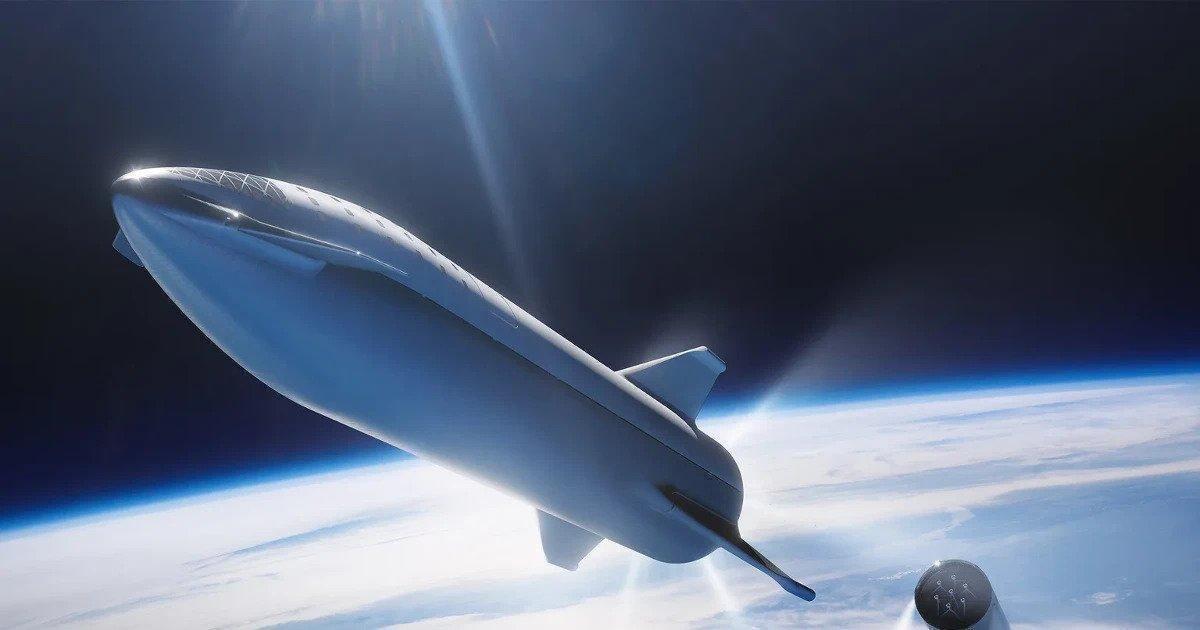
SpaceX Faces a $40 Billion Financing Problem With Its Orbital Data Center Ambitions
Building a data center in space sounds like a rocket engineering challenge. Get the hardware into orbit, provide power, manage heat and connect it to customers. But there is another problem that may be just as important: convincing lenders to finance the chips.
The $40 Billion Question Behind the Future of Space Computing
SpaceX is reportedly facing questions from lenders behind a $40 billion chip financing deal. According to the Financial Times, those lenders asked that the chips purchased through the deal not be used for the company's orbital data center plans. The reason is simple. Banks can repossess hardware on Earth. Recovering expensive processors from a satellite moving thousands of miles per hour is a very different business.
This exposes a financial weakness in the idea of moving AI computing into space. The technology may work, but the financing model may not.
The Business Model Behind Today's AI Data Centers
Modern data centers require enormous investment. Cloud providers borrow money to buy servers, build facilities and install computing equipment. They then repay those loans using revenue generated by customers renting computing capacity.
The chips themselves often serve as collateral. If a borrower cannot repay its debt, lenders can take possession of the hardware and sell it.
That arrangement reduces risk for lenders and makes financing cheaper for data center operators.
Importantly, AI chips do not immediately become worthless when newer models arrive. Compute Credit Index Research data cited in the original report shows that some H100 processors are selling for around half their original 2023 cost. Some H200 configurations are still selling for approximately their original 2024 launch price.
That resale value gives lenders confidence that their investment has a fallback.
Orbit Changes the Rules of Chip Financing
Now imagine those same chips installed inside satellites hundreds of miles above Earth.
If the company defaults, a lender cannot simply send a recovery team to remove the servers. The equipment is effectively outside the normal repossession system.
This creates a financing problem. The hardware may still have substantial technical value, but its value as collateral becomes much harder to use.
For lenders, that means greater risk. Greater risk usually means more expensive financing, stricter conditions or a refusal to support certain projects.
The reported restriction on SpaceX's $40 billion chip financing deal illustrates the conflict. The company wants flexibility to deploy computing hardware wherever it sees the greatest opportunity. Its lenders want assets they can recover if something goes wrong.
The two sides have different definitions of a safe investment.
SpaceX Has a More Immediate Opportunity on Earth
The orbital vision is ambitious, but SpaceX already has a potentially profitable path on the ground.
Elon Musk has described efforts to accelerate terrestrial data center construction by moving engineers from the rocket business into power generation and infrastructure work. One example involves developing ways to manufacture turbine blades for generators faster than existing suppliers.
This highlights a basic reality of AI infrastructure. Chips alone do not create a data center. Operators also need land, electricity, cooling, networking and construction capacity.
Many proposed projects are facing delays, local opposition and uncertainty about future demand. Even if computing demand remains strong, companies must prove that customers will pay enough to cover the enormous cost of building and operating these facilities.
Starship Is Important but Not a Complete Solution
Musk has argued that space could become the cheapest place to operate data centers within two to three years.
That outcome depends heavily on Starship becoming fully reusable.
In its latest flight test described in the report, SpaceX failed to recover the booster but successfully landed the orbital stage back at its Texas launch facility. The next flight and the cost of preparing that stage for another mission remain uncertain.
Reusable rockets could reduce transportation costs. But they do not automatically solve chip financing, satellite maintenance, power systems or the challenge of earning revenue from orbital computing.
A cheaper launch is only one part of the economic equation.
Google May Have a Different Advantage
Google's Project Suncatcher offers a different approach. Rather than relying entirely on conventional GPU purchases, Google is focused on deploying its own TPU chips in space.
Owning the chip design gives Google more control over its hardware strategy. It may also reduce dependence on the same supply and financing arrangements faced by other operators.
SpaceX and Tesla are working together on Terafab, a proposed US chip manufacturing project. But it has not yet broken ground and could take years and billions of dollars to reach large-scale production.
That means Terafab is a long-term possibility, not an immediate solution to SpaceX's hardware needs.
What Smaller Businesses Can Learn
For smaller companies, the lesson is not to build data centers in orbit. It is to understand that technology investments depend on how easily the assets can generate revenue and retain value.
Businesses planning major AI investments should:
-
Avoid buying more hardware than demand supports. Start with customer needs and expand capacity as revenue grows.
-
Compare ownership with rental models. Cloud services can reduce the upfront financial burden.
-
Protect resale value. Choose equipment with a clear second-hand market and avoid locking capital into specialized hardware without a strong reason.
-
Calculate the full operating cost. Include electricity, maintenance, financing and replacement costs, not just the purchase price.
-
Match debt to asset life. Borrowing should reflect how long equipment remains useful and how easily it can be sold.
These principles matter whether a company operates a small AI service or a global cloud platform.
The Real Cost of Space Computing
The race to put data centers in orbit is often presented as a contest between rockets, chips and engineering talent. But the financing challenge reveals another competitive battlefield.
On Earth, lenders can recover hardware and resale markets provide a financial safety net. In space, that safety net becomes far less reliable.
SpaceX may eventually overcome the engineering barriers. Google may gain an advantage through its own chips. New companies may discover ways to make orbital computing practical.
But the winning business will not simply be the one that can put the most processors into orbit. It will be the one that can finance them, operate them and turn their computing power into reliable revenue.
In the AI economy, reaching space is impressive. Making the numbers work is harder.
The $40 Billion Question Behind the Future of Space Computing
Space data centers, SpaceX chip financing, orbital computing, AI infrastructure, $40 billion chip deal, Elon Musk Starship, Google Project Suncatcher, Google TPU chips, Terafab chip factory, AI data center costs, chip resale value, satellite data centers, AI hardware investment, space computing business
