
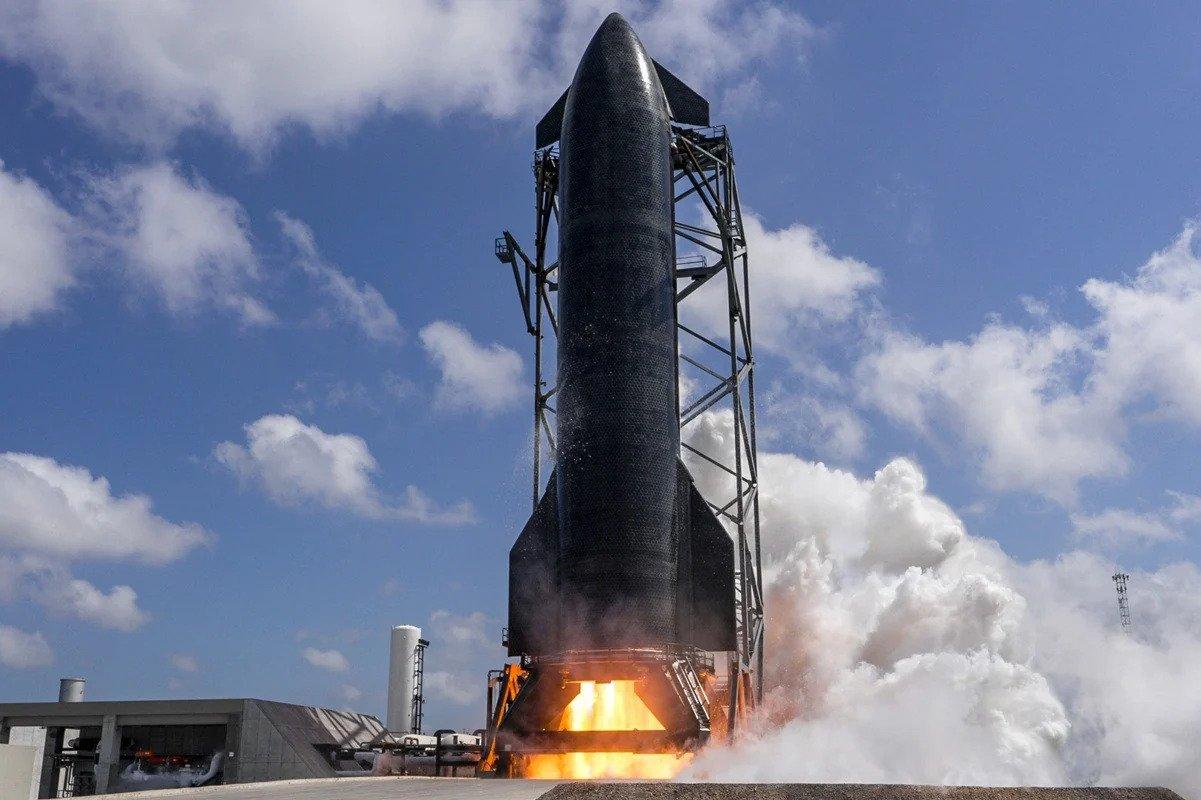
SpaceX Starship Has Failed Up to 11 Times. The Bigger Story Is What It Has Learned
SpaceX has a strange relationship with failure. Most companies spend enormous amounts of money trying to avoid it. SpaceX deliberately puts its most ambitious rocket through repeated tests, even when those tests end in explosions, engine failures or emergency mission termination.
SpaceX Plans to Catch Both Starship and Super Heavy in Its Next Major Milestone
But there is a bigger question behind the spectacle. Is Starship actually getting closer to becoming a commercially successful transportation system, or is SpaceX simply becoming better at managing expensive failures?
Its September 2026 orbital mission offers an important clue. Starship reached orbit for the first time and deployed 26 Starlink satellites. Yet an engine malfunction ended the mission before the spacecraft could complete its planned six revolutions around Earth.
That is neither a complete disaster nor an unqualified success. It is a useful snapshot of where the world's most ambitious rocket development program stands.
Starship Reaches Orbit but Falls Short of Its Mission
In late September 2026, SpaceX achieved a significant technical milestone. Starship entered orbit and successfully deployed 26 Starlink satellites.
However, the mission did not go according to plan.
An engine failure prevented the spacecraft from completing its intended orbital journey. Instead of reaching its 10-hour mission target, Starship had to end its flight early.
The distinction matters. Reaching orbit demonstrates that SpaceX has solved several difficult engineering problems. Completing the entire mission would demonstrate something more valuable: reliability.
For a rocket intended to carry satellites, astronauts and eventually large amounts of cargo, both capabilities are essential.
Four to Eleven Failed Launches Tell Different Stories
Counting Starship's failures is surprisingly complicated.
Across its first 14 launches, estimates place the number of unsuccessful missions somewhere between four and 11, depending on how success is defined.
A launch that successfully deploys satellites but loses its booster during landing is not equivalent to a rocket exploding shortly after takeoff.
SpaceX evaluates these missions through engineering progress rather than a simple pass-or-fail score.
That approach makes sense for experimental technology. But commercial customers eventually need predictable outcomes, not just promising experiments.
Starship Is Five Times More Powerful Than Falcon 9
The difference between an ordinary launch vehicle and SpaceX's next-generation transportation platform.
Starship is the largest and most powerful rocket ever assembled.
Its cargo capacity is approximately five times that of SpaceX's Falcon 9, giving the company the potential to transport significantly more material in a single mission.
This changes the economics of space transportation.
Instead of launching smaller payloads repeatedly, SpaceX wants to move much larger quantities of equipment, satellites and infrastructure in fewer flights.
The ultimate objective is not simply building a bigger rocket. It is making access to space cheaper and more scalable.
Starship's Development History Shows Real Progress
The first Starship test flight in April 2023 ended in an explosion approximately 65 miles short of its intended atmospheric climb.
Subsequent tests produced a mixture of setbacks and milestones.
The second flight achieved stage separation before both vehicles were lost. The third reached approximately 145 miles in altitude before disintegrating during its return.
Later missions improved significantly. SpaceX eventually demonstrated a successful booster catch using its launch tower's mechanical arms.
In August 2025, Starship deployed its first cargo of Starlink satellites. Its 11th test flight subsequently completed its major objectives, including a successful launch and landing.
However, the upgraded V3 vehicle introduced another challenge. Engine failures during its 12th test caused the vehicle to crash into the Gulf of Mexico.
In July 2026, the 13th flight successfully deployed 20 higher-powered Starlink satellites, although its booster failed to complete the landing.
The September mission added another milestone with 26 satellite deployments and orbital insertion.
The pattern is clear. SpaceX is advancing, but reliability remains unfinished business.
SpaceX Already Controls an Extraordinary Share of the Launch Market
The company's existing business explains why Starship matters so much.
According to BryceTech, SpaceX accounted for approximately 85% of spacecraft launched in 2025, including more than half of global orbital launches.
Meanwhile, satellite tracker Orbital Radar estimates that Starlink has approximately 9,800 active satellites, representing more than half of the world's total satellite population.
These numbers reveal an important advantage.
SpaceX does not need to build an entirely new customer market for Starship. It already operates a large satellite business that can benefit directly from cheaper launches.
Starship could strengthen an existing commercial ecosystem rather than relying entirely on future customers.
Starlink Could Become the Rocket's Biggest Commercial Beneficiary
Starlink is more than a satellite internet service. It creates recurring demand for spacecraft launches.
Every new generation of satellites requires transportation into orbit. Larger constellations require more launches, more infrastructure and better economics.
Starship could reduce the cost of deploying future satellites by carrying significantly larger payloads.
This creates a powerful business cycle.
More launch capacity supports a larger satellite network. A larger network creates more opportunities for recurring revenue. That revenue can support further investment in launch infrastructure.
SpaceX is effectively connecting rocket manufacturing, transportation and satellite services into one business system.
Starship Is Becoming a Platform Rather Than a Single Product
The most important distinction is between selling rockets and operating a space transportation platform.
A traditional launch provider primarily sells access to orbit.
SpaceX is attempting to control more of the value chain, from manufacturing and launch operations to satellite infrastructure and connectivity.
Its ambitions extend beyond Starlink.
The company has discussed a proposed constellation of one million satellites associated with space-based data centers, described as Starmind in the source material.
Such a project would require enormous transportation capacity.
Without a reusable heavy-lift vehicle, the economics would be extremely difficult to justify.
NASA's Artemis Program Adds Pressure to Starship
NASA selected SpaceX's Starship as the lunar lander for its Artemis program in 2021.
However, the project has reportedly fallen at least two years behind schedule.
NASA hopes to return astronauts to the Moon in 2028, while Starship must meet the Artemis III timeline targeted for summer 2027.
This creates a significant commercial and political challenge.
SpaceX is not developing Starship solely for Elon Musk's long-term ambitions. It also has major institutional customers with their own deadlines.
China's ambition to reach the Moon before the end of the decade adds another layer of urgency.
Reusability Could Become SpaceX's Biggest Competitive Advantage
The central economic promise of Starship is full reusability.
Rocket manufacturing is expensive. If a launch vehicle can be recovered, refurbished and launched again, the company can potentially spread manufacturing costs across many missions.
Falcon 9 has already demonstrated the commercial value of reusable boosters.
Starship aims to extend that model much further by recovering both the spacecraft and its Super Heavy booster.
During its third-quarter earnings call, Musk said SpaceX would attempt to catch both vehicles during the November 13, 2026 mission.
He described it as an attempt to achieve the first fully recovered orbital launch vehicle.
He also suggested the mission was more likely than not to succeed.
That is an ambitious target. The previous tests show why successful recovery cannot be assumed.
SpaceX is not operating without competition.
Blue Origin's New Glenn and United Launch Alliance's Vulcan represent alternative launch capabilities.
However, Starship's potential advantage is its combination of payload capacity, manufacturing scale and full reusability.
Competitors do not necessarily need to build an identical rocket to remain relevant. They can compete through specialized missions, government contracts and customers that value alternative launch providers.
SpaceX's challenge is converting its technical lead into dependable commercial performance.
Engine Reliability Remains a Critical Risk
Starship's biggest weakness is not its ambition. It is the distance between successful individual demonstrations and consistent operational performance.
Engine failures, booster recovery problems and mission interruptions all create uncertainty.
There are also regulatory considerations. Previous incidents triggered investigations by the FAA, including an explosion that disrupted air traffic over Florida.
Every failure can generate valuable engineering information, but it can also delay launches and increase operational costs.
The longer reliability remains uncertain, the harder it becomes for customers to plan missions around Starship.
SpaceX's AI Ambitions Depend on Cheaper Transportation
The proposed space-based data center constellation introduces another dimension to the business.
AI infrastructure requires computing equipment, energy and physical capacity. Space-based computing would add another layer of engineering complexity.
Starship could theoretically make transporting large quantities of infrastructure more economical.
But there is an important distinction between technical possibility and commercial viability.
A million-satellite constellation is an enormous undertaking. Launch costs are only one part of the equation. Manufacturing, power generation, communications, maintenance and operational reliability also matter.
For SpaceX, Starship is potentially the transportation foundation for an entirely new infrastructure business.
Small Businesses Can Learn From SpaceX's Fail Fast Strategy
The most useful lesson from Starship is not that businesses should accept failure without limits.
It is that experiments should produce measurable information.
Small and medium-sized businesses often struggle with AI adoption because they try to implement expensive systems before understanding the problem they need to solve.
A better approach is to start with controlled experiments.
-
Test AI customer support with a small group before deploying it across the company.
-
Automate one repetitive business process and measure the time saved.
-
Compare AI-generated marketing content against existing campaigns.
-
Track customer acquisition costs rather than celebrating the number of AI tools installed.
-
Expand only when the experiment produces measurable financial value.
SpaceX can afford enormous engineering experiments because it has substantial resources and an established commercial business.
Smaller companies need tighter limits.
The principle remains the same. Every experiment should reduce uncertainty and improve the next decision.
The November 13 Launch Could Define Starship's Next Chapter
Starship's September flight demonstrated meaningful progress, but it also exposed the remaining gap between reaching orbit and completing a reliable mission.
The November 13 test is particularly important because SpaceX intends to attempt recovery of both the spacecraft and its booster.
Success would represent a major step toward a reusable transportation system.
Failure would not necessarily invalidate the program, but it would reinforce the challenges surrounding its development schedule.
The bigger question is whether SpaceX can turn engineering progress into repeatable commercial performance.
The Real Victory Is Making Spaceflight Economically Repeatable
SpaceX has already established itself as a dominant force in the global launch industry.
Starship represents its attempt to move beyond that position and fundamentally change the economics of space transportation.
Its potential applications include Starlink expansion, NASA lunar missions, large-scale satellite infrastructure and eventually human missions to Mars.
But potential is not the same as execution.
The difference between an impressive rocket and a profitable transportation platform is reliability, repeatability and cost.
Starship does not need every test to be perfect. It needs every test to bring the company closer to a system that customers can depend on.
That is the real measure of success.
SpaceX Plans to Catch Both Starship and Super Heavy in Its Next Major Milestone
SpaceX Starship, Starship launch, SpaceX rocket, reusable rockets, Starship failures, Starlink satellites, SpaceX business model, rocket technology, space economy, orbital launches, NASA Artemis, AI data centers, satellite infrastructure, commercial spaceflight
