
Things The Media Never Tells You About Cycling In Vietnam
Most international travelers associate Vietnam with motorbikes. The traffic videos alone have become part of the country’s global identity. Yet beneath the noise and movement, another style of travel has quietly expanded across Vietnamese cities — cycling. Not competitive cycling. Not luxury cycling tours designed for athletes. But slow urban exploration shaped by lakes, coastlines, fishing villages, colonial streets, cafés, rice fields, and local neighborhoods that reveal themselves properly only when travelers reduce speed. Cities like Hanoi, Da Nang, Hoi An, Da Lat, and Vung Tau are not perfect cycling cities in the European sense. They are far more improvisational. And strangely, that unpredictability becomes part of the appeal.
Hanoi . Cycling Through Layers Of Contradiction
Hanoi is not the first city most travelers imagine for cycling.
At first glance, it appears chaotic beyond comprehension. Thousands of motorbikes surge through intersections while sidewalks constantly transform into parking areas, cafés, or temporary markets. Yet after several days, many visitors notice something surprising: Hanoi moves according to patterns hidden beneath the apparent disorder.
Cycling here becomes less about speed and more about observation.
Around Hoan Kiem Lake, early mornings belong to elderly residents practicing tai chi while younger cyclists circle the lake before traffic intensifies. Nearby, the Old Quarter shifts constantly between tourism and ordinary urban life. One street sells mechanical tools. Another specializes almost entirely in religious supplies. Another smells permanently of grilled pork and coffee.
And then there is West Lake.
The roads surrounding the lake provide one of the city’s most comfortable cycling loops, especially during sunrise or late afternoon. Foreign travelers, university students, fitness cyclists, and local couples all share the same route. The atmosphere feels unexpectedly calm compared to central Hanoi.
One European traveler wrote in a cycling forum:
“Hanoi only looks aggressive from the outside. Once you stop resisting its rhythm, the city suddenly becomes readable.”
That sentence explains Hanoi better than most guidebooks.
Da Nang . Vietnam’s Most Practical Coastal Cycling City
Da Nang approaches cycling differently.
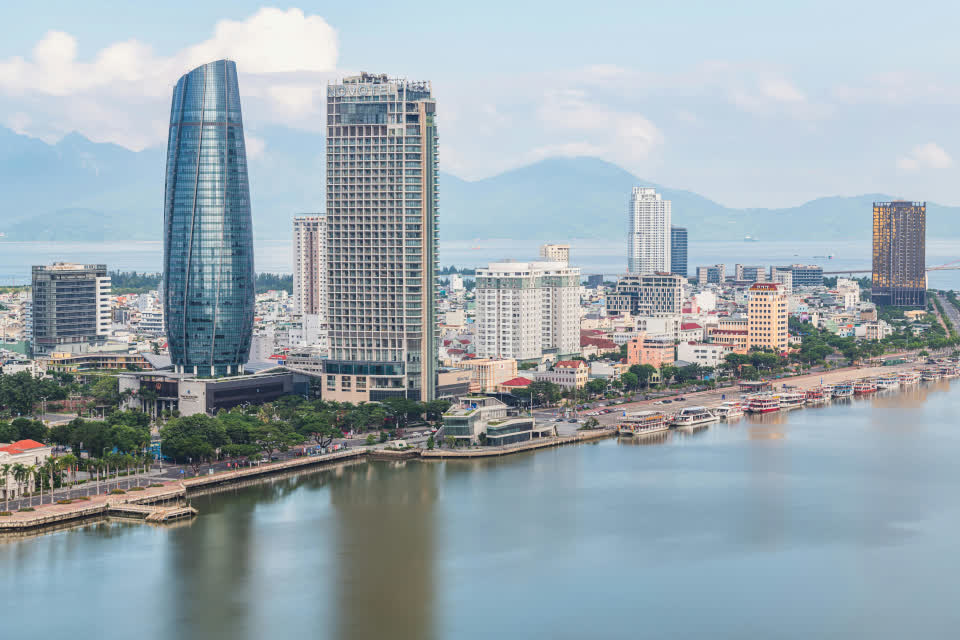
Unlike Hanoi or Ho Chi Minh City, Da Nang was built with wider roads, cleaner coastal infrastructure, and more modern urban planning. For travelers uncomfortable with Vietnam’s larger traffic systems, Da Nang often becomes the easiest entry point into urban cycling.
The routes themselves shape the experience.
Cycling from the Han River toward My Khe Beach creates a transition between urban density and open coastline within minutes. Sea wind cuts through tropical heat while long boulevards stretch beside beaches crowded with morning swimmers and seafood stalls.
Further south, the road toward Non Nuoc Beach and the Marble Mountains reveals another side of the city entirely — slower, more residential, less vertical.
What makes Da Nang particularly attractive for planners is accessibility.
Hotels frequently provide bicycle rentals. Day tours already exist for travelers wanting guided coastal rides. Distances between major attractions remain manageable without requiring advanced physical fitness.
And unlike many heavily touristed destinations, Da Nang still feels functionally local rather than fully transformed into a tourism performance.
Hoi An . A City Designed For Slow Movement
If one Vietnamese destination naturally fits cycling culture, it is probably Hoi An.
Scale matters here.
The city’s compact geography changes how travelers interact with space entirely. Beaches, rice fields, lantern-lined streets, fishing villages, and farming communities all sit within short cycling distances of one another. The route from the Ancient Town toward An Bang Beach or Cua Dai Beach feels manageable even for casual riders.
That accessibility transforms behavior.
Travelers stop more often. They notice details usually ignored from taxis or buses — incense drifting from family altars, ducks crossing flooded rice paddies, old women selling herbs from bicycles, schoolchildren waving from village roads.
The cycling routes extending toward Tra Que Vegetable Village, Thanh Ha Pottery Village, and Kim Bong Carpentry Village reveal how much of Hoi An’s identity still depends on surrounding rural communities rather than tourism alone.
This matters because many travelers misunderstand Hoi An as a preserved museum city.
It is still economically alive beyond the lanterns.
Things The Media Doesn’t Tell You
Travel videos about cycling in Vietnam usually emphasize cinematic scenery — empty beaches, peaceful rice fields, smiling locals, and drone footage at sunrise.
Reality is more layered.
Vietnam can be rewarding for cyclists, but it also demands adaptability.
Weather changes quickly. Sidewalks disappear unexpectedly. Traffic flows differently than in Europe or North America. Road rules often function more as negotiation than strict enforcement. Heat exhaustion becomes real during summer afternoons.
Smart travelers gather “real data” before planning cycling routes:
- Read recent Google Maps reviews about road conditions and traffic density
- Watch helmet-camera YouTube rides instead of edited tourism reels
- Search Reddit discussions about seasonal flooding or air quality
- Browse Facebook cycling groups based in Vietnam for updated route advice
- Check TikTok clips filmed during rush hour, not only sunrise photography sessions
Without this research, expectations become unrealistic.
Vietnam is not Amsterdam.
That difference is precisely what many travelers eventually appreciate.
Cycling here feels dynamic rather than controlled.
Da Lat . The Romantic Image Versus Physical Reality
Da Lat appears constantly in Vietnamese tourism campaigns for good reason. Pine forests, cool weather, lakes, flower gardens, waterfalls, and French colonial villas create a visual atmosphere unlike most Southeast Asian cities.
And yes, cycling around Xuan Huong Lake can feel genuinely cinematic during misty mornings.
But Da Lat also exposes the gap between romantic imagery and physical reality.
The city sits at elevation. Roads climb aggressively. Even short rides become surprisingly demanding for travelers unaccustomed to steep terrain. Weather shifts rapidly from sunlight to cold rain within hours.
This unpredictability divides travelers.
Some visitors adore the challenge and rent mountain bikes to explore destinations like Lang Biang Mountain, Datanla Waterfall, or Prenn Waterfall.
Others discover too late that Da Lat cycling requires more stamina than expected.
One backpacker wrote online:
“Da Lat is beautiful on a bicycle right up until the moment you realize every road back to your hotel is uphill.”
That humor contains useful truth.
Vung Tau . The Simplicity Many Travelers Miss
Vung Tau rarely dominates international travel conversations the way Da Nang or Hoi An do.
Yet many domestic travelers continue returning for one simple reason: the city works well at human speed.
The coastal roads remain relatively open compared to larger Vietnamese cities. Cycling beside the sea at sunset feels uncomplicated in the best possible way. Travelers move between beaches, seafood restaurants, cafés, and viewpoints without constantly checking maps or schedules.
Routes connecting Front Beach, Back Beach, and the hills surrounding the Christ of Vung Tau statue create an experience balancing relaxation with light physical activity.
Vung Tau also reveals something often ignored in international travel writing about Vietnam:
Not every destination needs to feel dramatic.
Some cities succeed because they allow travelers to slow down naturally.
Cycling In Vietnam Changes What Travelers Notice
Transportation shapes perception more than most travelers realize.
Motorbikes emphasize movement efficiency. Cars isolate visitors behind glass. Tour buses compress destinations into schedules. Bicycles alter sensory awareness completely.
You hear conversations. Smell street food earlier. Notice architectural transitions between neighborhoods. Feel humidity changing beside lakes or coastlines. Observe how people actually use public space.
That intimacy changes travel memory.
Vietnam’s cycling cities are imperfect, occasionally chaotic, sometimes exhausting, and often unpredictable. Yet those imperfections create encounters impossible to reproduce through polished itineraries alone.
And perhaps that is the deeper reason travelers remember these routes long after returning home.
Not because the cities were perfectly designed for bicycles.
But because bicycles allowed the cities to feel more human.
Vietnam’s Best Cycling Cities For Travelers Who Want More Than Sightseeing.
Vietnam cycling, Hanoi bicycle routes, Da Nang cycling, Hoi An bike tour, Da Lat cycling, Vung Tau beaches, Vietnam travel guide, cycling Vietnam cities, West Lake Hanoi, Hoi An countryside, Da Lat mountain biking, Vietnam bicycle travel, coastal cycling Vietnam, Vietnam slow travel, bicycle friendly Vietnam
