
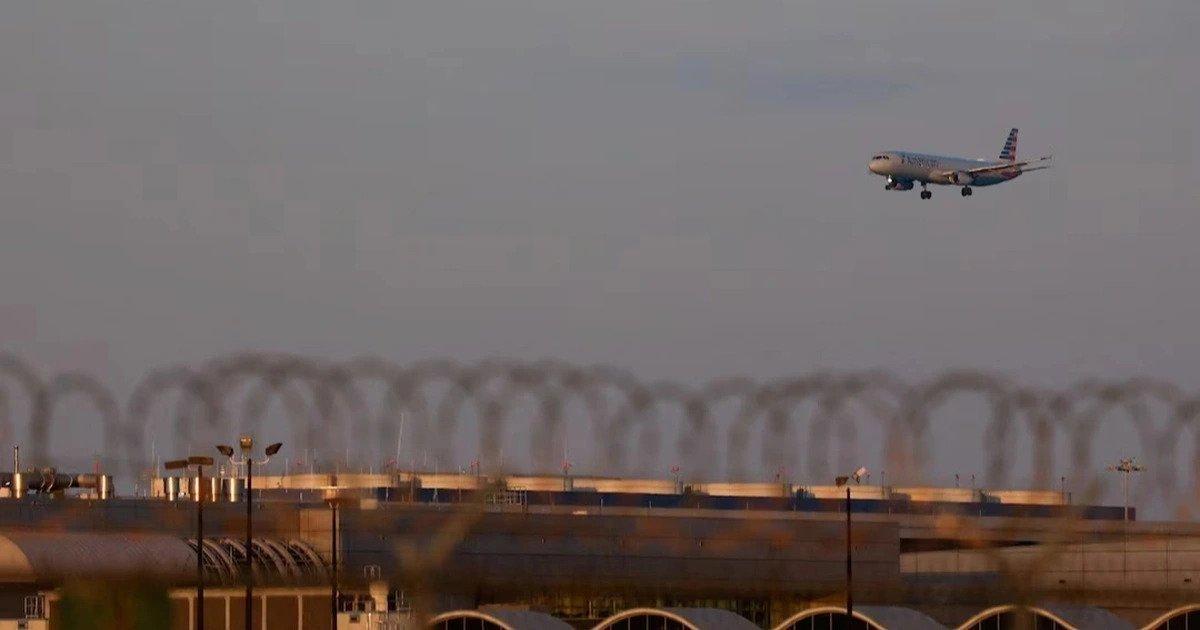
Modern aviation is built on a simple promise. Buy a ticket, arrive at the airport, board your plane, and reach your destination on time.
Airline Digital Transformation Faces a New Test as Delta Struggles in Atlanta
Behind that apparently simple experience is a complicated network of software, aircraft systems, airport operations, safety checks, and human decisions. When one important system stops working, the effects can spread quickly.
Delta Air Lines is facing exactly this problem in Atlanta.
According to the Federal Aviation Administration (FAA), the airline experienced difficulties with its automated weight and balance system at Hartsfield-Jackson Atlanta International Airport. The system plays an important role in preparing aircraft for departure by helping ensure that passengers, baggage, and cargo are distributed safely.
The disruption resulted in average delays of approximately one hour for Delta flights passing through Atlanta.
Delta began using manual procedures to keep flights departing safely while engineers worked to restore the automated system.
At first glance, this looks like another airline delay. But the deeper issue is much more important.
The incident highlights how modern transportation businesses depend on interconnected software systems. Automation makes operations faster and more efficient, but it also creates new risks when critical technology fails.
For airlines, airports, technology providers, and even small businesses building their operations around software, there is an important lesson. Digital efficiency is valuable only when the system can continue operating when something goes wrong.
One Automated System Disrupts Delta's Atlanta Operations
The problem occurred at Atlanta's Hartsfield-Jackson International Airport, one of the most important aviation hubs in the United States.
Delta's automated weight and balance system experienced technical difficulties, forcing the airline to rely on manual workarounds.
Weight and balance calculations are not ordinary administrative tasks.
Before an aircraft takes off, airlines must ensure that its weight and the distribution of that weight remain within approved safety limits. Passenger seating, baggage, cargo, and fuel all affect the aircraft's operating conditions.
The automated system helps manage this process efficiently.
When it becomes unavailable, airline employees must use alternative procedures to complete the required checks.
This takes additional time.
According to the original report, Delta flights operating through Atlanta experienced average delays of around 60 minutes.
Delta also confirmed that it was coordinating with air traffic controllers to manage airport traffic affected by the disruption.
The company was working to restore automation while maintaining safe flight operations.
This distinction matters. The airline was not simply trying to make flights leave faster. It needed to maintain safety while working through a system failure.
The Timing Makes the Incident More Concerning
The Delta disruption came shortly after several other aviation technology problems.
On Friday, November 13, a separate incident caused a nationwide grounding of flights lasting approximately four hours.
The original report describes this as an event that brought air transportation across the country to a halt.
Another technology-related problem affected United Airlines earlier that week.
Now Delta was experiencing its own operational disruption.
These incidents involved different airlines and systems. The available information does not establish that they shared a common technical cause.
However, their close timing raises an important question about the reliability of the digital infrastructure supporting modern aviation.
Airlines have spent years investing in software to improve scheduling, passenger management, aircraft preparation, crew coordination, and airport operations.
These systems create enormous value.
But they also mean that a technical problem in one critical area can affect thousands of people who have no direct relationship with the original failure.
The passenger sees a delayed departure.
The airline sees a disrupted operational network.
The difference between those two perspectives explains why aviation technology reliability is a major business issue.
What Makes the Weight and Balance System So Important?
An aircraft must operate within specific weight and balance limits.
If weight is distributed incorrectly, the aircraft may not respond as expected during takeoff, flight, or landing.
Airlines therefore need reliable procedures to calculate and verify aircraft loading before departure.
Automation helps make these calculations faster and more consistent.
Instead of relying entirely on manual processes, employees can use software to organize information and complete required checks.
This is particularly valuable at a major hub like Atlanta, where Delta handles a large volume of connecting passengers and aircraft movements.
However, automation does not eliminate the underlying responsibility.
The airline must still ensure that every aircraft meets safety requirements.
When the software fails, manual procedures become necessary.
This is where operational resilience becomes important.
A good technology system should not only perform well when everything is working. It should also allow employees to continue essential operations when part of the system becomes unavailable.
Delta's manual workarounds demonstrate why human expertise remains essential even in highly automated industries.
The Business Model Behind Airline Automation
Airline technology is not simply about replacing paperwork with computers.
It is about improving the economics of operating a complex transportation network.
Every aircraft has limited time available for productive use. Every delay can affect passengers, crews, aircraft schedules, connecting flights, and airport capacity.
Automation helps airlines coordinate these moving parts.
Its business value comes from several areas.
Operational efficiency
Software can process information faster than manual workflows, helping airlines prepare aircraft and coordinate departures.
Lower administrative costs
Automated systems reduce repetitive work and allow employees to focus on more important operational responsibilities.
Better coordination
Airlines need to manage aircraft, passengers, baggage, crews, and airport schedules simultaneously. Digital systems help connect these activities.
Greater network productivity
When aircraft and crews operate according to schedule, airlines can use their resources more efficiently.
The commercial logic is straightforward.
A more efficient airline can potentially serve more passengers with its existing resources.
But this advantage depends on reliability.
If automation fails at a critical moment, the efficiency gains can quickly disappear.
A system that saves minutes during normal operations but creates hours of disruption during a failure may not deliver the expected business value.
Airline Technology Is Becoming a Platform Business
Modern airlines increasingly operate like technology companies.
Their products are not limited to aircraft seats and transportation.
They depend on interconnected digital systems that support the entire customer journey.
A passenger interacts with booking platforms, payment systems, mobile applications, check-in services, baggage tracking, airport infrastructure, and flight operations.
Behind the scenes, different systems exchange information to keep the network moving.
This creates a platform-like business structure.
The airline connects passengers, airports, employees, suppliers, aircraft operators, and technology providers.
The value comes from making these different participants work together.
But interconnected systems introduce dependencies.
If one critical component stops communicating correctly with another, the disruption can spread.
Delta's weight and balance issue is a useful example.
A problem involving one operational system can affect departures across an entire airport network.
This is why software architecture matters.
Airlines need systems that are reliable, well-tested, and designed to handle failures without bringing every connected operation to a halt.
The Competitive Advantage Is No Longer Just Aircraft and Routes
Airline competition has traditionally focused on ticket prices, routes, loyalty programs, aircraft fleets, and customer service.
Those factors remain important.
But technology is becoming another major competitive advantage.
An airline with better operational software may be able to coordinate aircraft more efficiently, reduce unnecessary delays, improve passenger communication, and use its resources more effectively.
Artificial intelligence could eventually support several of these activities.
For example, AI systems can help forecast demand, identify scheduling conflicts, analyze maintenance information, and improve resource planning.
However, AI does not automatically solve operational problems.
A system responsible for safety-related calculations must be dependable, tested, and supported by clear procedures.
Airlines cannot treat critical infrastructure like an experimental software product.
The most competitive businesses will likely be those that combine automation with strong operational controls.
They will use technology to improve performance while preserving the ability to operate when technology becomes unavailable.
The Risks Behind Increasing Automation
Delta's disruption reveals several important risks for companies that depend on automated systems.
Single points of failure
When a critical process depends too heavily on one system, its failure can disrupt a much larger operation.
Software complexity
Modern platforms often depend on multiple services, databases, and connections. A problem in one component may create unexpected consequences elsewhere.
Operational dependence
Employees who rely heavily on automation may find manual procedures slower or more difficult when systems become unavailable.
Third-party technology exposure
Businesses that depend on external software providers may face problems beyond their direct control.
Recovery costs
Restoring a system is only part of the challenge. Companies must also manage delayed operations, customer complaints, employee workloads, and the backlog created during the disruption.
There is also a broader issue.
Automation can make businesses more productive while making them more dependent on technology.
That trade-off must be managed carefully.
The Impact on Delta and the Wider Airline Industry
For Delta, the immediate problem is operational disruption.
An average delay of approximately one hour across affected flights can create additional pressure on airport operations.
Aircraft may arrive later than expected. Passengers may miss connections. Crew schedules may need adjustments. Airport teams may have to reorganize departure activity.
Even after the original technical problem is resolved, the airline may need time to restore its normal schedule.
The wider industry faces a different challenge.
Passengers increasingly expect airlines to provide reliable digital experiences.
They want accurate flight information, efficient check-in, real-time updates, and predictable departures.
When these systems fail, customer confidence can suffer.
Repeated incidents may also increase pressure on airlines to demonstrate that their technology infrastructure is sufficiently reliable.
The important point is that an airline's reputation is no longer determined only by what happens inside the aircraft.
It is also shaped by the performance of the digital systems supporting the entire journey.
The US-China Technology Divide Adds a Strategic Challenge
The airline industry is also operating in a period when the United States and China are developing increasingly separate technology ecosystems.
This separation affects areas such as semiconductors, artificial intelligence, telecommunications, cloud infrastructure, and industrial technology.
For aviation companies, technology choices have long-term consequences.
Airlines need dependable software, hardware, communication systems, and infrastructure that can remain operational for many years.
As global technology supply chains become more complicated, companies may need to consider supplier diversity, technology compatibility, cybersecurity, and long-term maintenance.
Artificial intelligence could improve airline operations, but access to advanced computing and technology suppliers may become increasingly important.
For businesses in Europe and the United States, this creates a need to balance innovation with supply chain security.
For smaller companies, the same lesson applies at a different scale.
Depending entirely on one technology provider can create unnecessary business risk.
The objective should be flexibility, not technological complexity.
What Small and Medium-Sized Businesses Should Learn From Delta
Most small businesses do not operate aircraft or manage airport traffic.
But many depend on the same basic technology structure.
A restaurant depends on payment systems and ordering software.
An online store depends on its website, payment gateway, inventory management, and delivery platforms.
A marketing agency depends on cloud applications, customer databases, and communication tools.
A small manufacturer may depend on automated production equipment and inventory software.
When one critical system stops working, business operations can quickly become more difficult.
The lesson from Delta is not that businesses should avoid automation.
It is that they should understand what happens when automation fails.
Small and medium-sized companies should focus on several practical areas.
Keep backup procedures
If the payment system stops working, employees should know how to record orders and transactions safely.
Avoid unnecessary dependence on one provider
Where practical, businesses should maintain alternative ways to access important data and services.
Protect important information
Customer records, financial information, inventory data, and business documents should have reliable backup arrangements.
Train employees
Staff should understand the basic manual process for essential tasks.
Choose technology based on reliability
The cheapest software is not always the cheapest solution if it repeatedly interrupts business operations.
These are not expensive digital transformation projects.
They are basic business protections.
What I Would Do If I Ran a Micro or Small Business
If I were operating a micro business with limited capital, I would not begin by purchasing more software.
I would first identify the three technology systems that could stop the business from operating.
For example, an online store might depend on its payment gateway, website, and inventory system.
A restaurant might depend on its payment terminal, ordering platform, and delivery application.
I would then create a simple backup process for each one.
If the payment platform stopped working, employees would need a safe alternative for recording orders and payments.
If the website became unavailable, the business should still have a way to communicate with customers.
If inventory software failed, staff should know how to access the latest available inventory records.
My next step would be to make sure important data could be recovered.
I would prioritize customer information, invoices, financial records, supplier details, and product information.
I would also avoid putting every business function into one complicated software platform unless the benefits clearly justified the dependence.
For a small company, simplicity is an advantage.
I would use AI for tasks where it could reduce administrative work, such as preparing reports, organizing customer inquiries, analyzing sales trends, or drafting internal documents.
But I would not allow an AI tool to become the only place where important business information exists.
Finally, I would test the backup process.
A backup plan that has never been tested is only a document.
The goal is not to eliminate every technology failure. That is unrealistic.
The goal is to make sure one failure does not destroy the ability to serve customers.
The Future of Automation Depends on Reliability
Delta's Atlanta disruption is a reminder that technological progress has two sides.
Automation can make businesses faster, cheaper, and more productive. It can also create new dependencies that are difficult to manage when critical systems fail.
The airline industry makes this problem particularly visible because safety, timing, and coordination are closely connected.
But the same principle applies to almost every modern business.
As companies adopt AI, cloud software, automated workflows, and connected platforms, reliability becomes an increasingly important part of competitive advantage.
The United States and China may continue developing different technology ecosystems. AI capabilities may become more advanced. Businesses may automate more of their daily operations.
Yet none of these developments changes one fundamental requirement.
A business must still be able to operate when its technology stops working.
Delta's response was to use manual procedures while working to restore its automated system. That is an important reminder that human expertise and technology should support each other rather than exist as competing choices.
The future does not belong simply to businesses with the most automation.
It belongs to businesses that know how to use automation without becoming helpless when it fails.
In aviation, that can mean keeping aircraft operations moving safely.
For a small business, it can mean keeping the doors open, serving customers, and protecting revenue.
That is the real meaning of operational resilience.
Airline Digital Transformation Faces a New Test as Delta Struggles in Atlanta
Delta flight delays, Atlanta airport delays, Delta automation failure, airline technology systems, weight balance system, airline operational risk, aviation software failure, airline digital transformation, AI airline operations, automated flight systems, business continuity planning, technology backup systems, small business automation, operational resilience
