
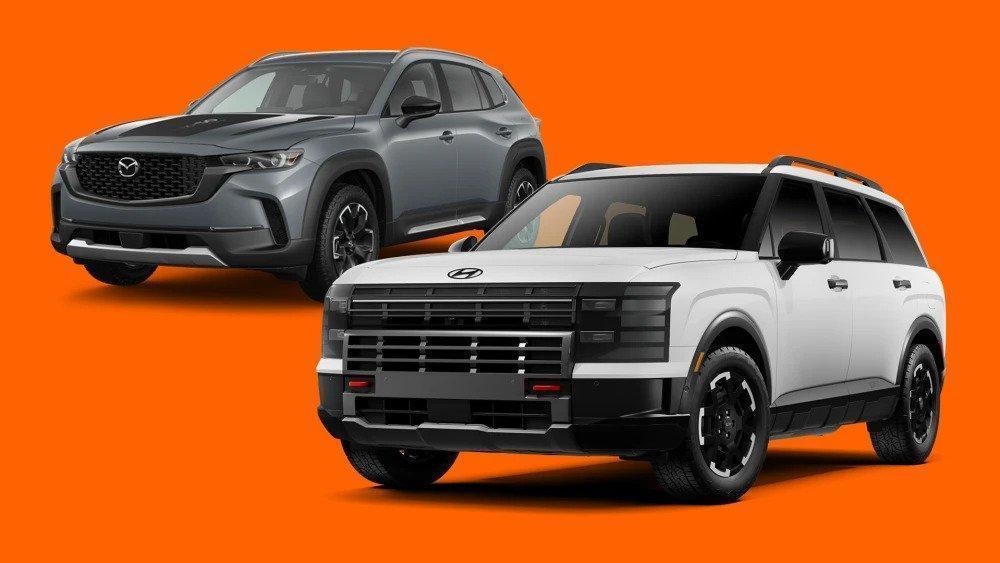
Amazon Autos Is Coming to the UK in 2027 and Hyundai Is First in Line
Amazon is entering a market where customers spend thousands of pounds, compare dozens of options, and often feel uncertain about whether they are getting a fair deal. Buying a car is not like buying a phone charger. It involves financing, trade-ins, paperwork, and a physical vehicle that customers usually want to inspect before committing.
Amazon Wants to Simplify Car Buying but Dealerships Still Close the Deal
Amazon believes it can make the process easier.
In early 2027, Amazon Autos will launch in the UK, marking its first expansion outside the United States. Hyundai will be its first announced automaker partner, alongside UK dealership group Vertu Motors. The ambition is straightforward — make car shopping feel more like online shopping, while leaving the final transaction in the hands of traditional dealers.
The interesting question is not whether Amazon can display cars online. Everyone can do that. The real question is whether Amazon can make customers trust the buying process enough to change where they start shopping.
Amazon Autos Is Expanding Internationally for the First Time
Amazon Autos will allow UK customers to browse new and used vehicles, compare prices, explore financing options, and reserve cars online.
The service is expected to launch in early 2027, with Hyundai and Vertu Motors announced as initial partners. Amazon says additional automakers and dealerships will be announced in the coming months.
The platform will let customers search by make, model, color, and price. It will also provide financing comparisons, trade-in estimates, and information about nearby dealerships.
But Amazon will not replace the dealership.
Customers will still need to visit the dealer to complete the purchase, and the dealer will handle the final sale and financing. Amazon is positioning itself as the digital storefront that helps customers find a vehicle and arrive at the dealership better prepared.
That distinction is central to the business model.
Amazon Is Bringing Familiar E-Commerce Tools to Car Shopping
The new service introduces several features designed to remove uncertainty from the buying process.
Customers will be able to compare personal contract purchase, hire purchase, and cash-buying options. They can also receive estimated part-exchange values for their existing vehicles and discover dealerships nearby.
For consumers, this could mean less time moving between websites, calling dealers, and trying to understand different offers.
Amazon's advantage is familiarity. Millions of people already know how to search, filter, compare, and purchase products on its platform. Applying that experience to cars could reduce the friction of a traditionally complicated buying process.
The vehicle itself remains a major purchase requiring physical inspection and dealer involvement. But the research phase could become considerably easier.
Amazon's Real Business Is the Customer Relationship, Not the Car
Amazon is not trying to become a traditional car dealership. It is building a platform that connects customers with dealerships at the moment they are ready to buy.
That difference matters.
In the United States, Amazon Autos works with thousands of dealers. Its platform covers 14 brands selling new and used vehicles, plus another 21 brands selling used cars only — 35 brands in total. The service has expanded from 48 cities at launch to more than 150 cities.
Amazon's model is built around connecting demand with businesses that already have the inventory, physical locations, and staff to complete sales.
According to the original report, Amazon does not take a commission on vehicle sales. Instead, its revenue comes from dealer subscription fees and advertising.
That means Amazon can potentially make money without owning the cars, maintaining showrooms, managing test drives, or carrying inventory risk.
It is a familiar platform strategy. Amazon builds the customer-facing experience, attracts shoppers, and sells access to that attention and demand to businesses.
Dealerships Get Customers but Must Prove the Value
For dealerships, Amazon offers a potential advantage that is difficult to build independently — access to customers who already trust the platform and are actively searching for a vehicle.
A dealership can spend money on advertising, build its own website, and hire salespeople. But attracting customers consistently is expensive, especially for smaller operators.
Amazon could reduce that burden by delivering people who have already compared vehicles, reviewed financing options, and identified the cars they want.
However, there is a problem.
Earlier reporting cited in the original article indicated that some US dealers were disappointed with Amazon Autos' performance, saying the platform was slow to deliver tangible results. Some reportedly experienced only one or two sales per month.
That raises an important business question. Traffic is not the same as sales.
A platform can attract visitors, generate searches, and create customer interest without delivering enough completed purchases to justify dealer fees. For dealerships, the value of Amazon Autos will ultimately depend on how many real customers it converts into profitable sales.
The Risks Behind Amazon's Automotive Expansion
Amazon has strong technology, customer reach, and experience in online retail. But car buying is fundamentally different from buying ordinary consumer products.
The first challenge is trust. Customers may compare prices online, but they still want confidence that the vehicle is in good condition, the financing is fair, and the dealership will honor its commitments.
The second challenge is conversion. Amazon can help customers discover vehicles, but the dealer controls the final experience. If the customer encounters confusing paperwork, unexpected fees, poor service, or pressure to buy additional products, the online experience may not translate into a completed sale.
The third challenge is dealer economics. Dealers must pay for platforms, advertising, staff, facilities, inventory, and financing operations. If Amazon delivers only a small number of additional sales, its platform could become another expense rather than a growth engine.
And the fourth challenge is competition. Automotive marketplaces already exist, and many dealerships have invested in digital sales tools. Amazon will need to offer something meaningfully better than simply putting another search box in front of car listings.
Traditional Dealerships Could Face a New Competitive Pressure
Amazon's arrival could change how customers begin the car-buying process.
Instead of visiting multiple dealership websites, buyers may increasingly start with a familiar digital platform where they can compare vehicles, prices, financing, and trade-in estimates in one place.
That creates pressure on dealerships to compete on transparency, speed, and customer experience.
Large dealership groups may be better positioned to adapt because they have more resources to manage digital listings, pricing systems, advertising, and customer follow-up.
Smaller dealerships could face a more difficult situation. They may depend on third-party marketplaces for visibility while having limited budgets to compete for customers.
The danger is not necessarily that Amazon will take over car sales. It is that Amazon could gradually become the place where customers make their initial decisions, leaving dealerships with less control over the customer relationship.
When a platform owns the discovery process, businesses risk becoming suppliers inside someone else's ecosystem.
What Small and Medium Businesses Should Do Now
For dealerships and other small businesses, Amazon's expansion is a reminder that customer acquisition is changing.
Customers increasingly expect to research, compare, communicate, and make decisions online before speaking to a salesperson. Businesses that still depend entirely on walk-in traffic may find it harder to compete.
But the solution is not to depend on Amazon, Google, or another platform for every customer.
Small businesses should focus on building capabilities they control.
-
Improve online listings. Make pricing, inventory, product details, and availability accurate. Customers should not need to call simply to discover basic information.
-
Respond faster. Customers often contact multiple businesses at once. The business that answers clearly and quickly can win the sale.
-
Build customer relationships directly. Collect customer contacts with permission, maintain follow-up systems, and encourage repeat purchases.
-
Measure actual results. Track how many leads become sales, how much each customer costs to acquire, and whether third-party platforms generate profitable business.
-
Use platforms strategically. Marketplaces can help attract new customers, but businesses should avoid depending entirely on one platform for survival.
The goal is not to reject marketplaces. It is to use them without surrendering the entire customer relationship.
What I Would Do If I Ran a Small or Micro Business
If I were operating a small business with limited money, I would not attempt to compete with Amazon on technology, advertising budgets, or scale.
I would compete on speed, trust, and personal service.
My strategy would be simple.
First, use large platforms to find customers. If Amazon, Google, Facebook, or another marketplace can bring customers at a reasonable cost, I would use it. I would not waste money trying to build a massive platform of my own.
Second, make the buying process easier than competitors. Provide clear prices, honest product information, straightforward policies, and fast answers. Customers should not have to work hard to buy from me.
Third, turn every successful transaction into a long-term relationship. With customer permission, I would build a direct contact database, offer useful follow-up, and encourage repeat purchases. A customer who returns without requiring another expensive advertisement is much more valuable.
Fourth, avoid spending money on technology that does not solve a real problem. AI tools, automation, chatbots, and online marketplaces are useful when they reduce costs or improve customer service. They are distractions when a business has not yet figured out how to consistently make sales.
A small business does not need to win the technology race. It needs to survive long enough to build a profitable customer base.
The US-China Technology Split Makes Business Adaptability More Important
The technology competition between the United States and China is increasingly shaping AI, digital infrastructure, software, and business platforms. Companies may face different tools, regulations, ecosystems, and technology choices depending on the markets they operate in.
But for small businesses, the practical lesson is not to choose a technological side blindly.
The lesson is to remain adaptable.
Use tools that solve real business problems. Keep customer data and business processes organized. Avoid becoming dependent on a single provider when alternatives are available. Build capabilities that can survive changes in platforms, pricing, and technology.
Amazon Autos is a useful example of a broader trend. Large technology companies are expanding into industries that traditionally operated through physical businesses and local relationships. They are not always replacing those businesses. Sometimes they are controlling the digital layer that connects customers to them.
That digital layer can become extremely valuable.
The Real Winner May Be the Company That Owns the First Click
Amazon's UK automotive expansion is not a revolution in car manufacturing. It is a bet on customer behavior.
The company wants to become a convenient starting point for people who are ready to research and purchase vehicles. If it succeeds, dealerships may still own the inventory, conduct inspections, arrange financing, and complete the sale — but Amazon could increasingly influence which dealership receives the customer.
That is the power of a marketplace.
The US experience also shows that customer traffic alone does not guarantee success. Dealers need measurable sales, not just visibility. Amazon needs to prove that its platform can consistently turn browsing into profitable transactions.
For small businesses, the lesson is clear. Digital platforms can create opportunities, but the businesses that survive will be those that understand their customer acquisition costs, deliver a better experience, and build relationships beyond the marketplace.
In the next decade, you may not need to own the biggest storefront. But you will need to know where your customers begin their journey — and make sure you are not invisible when they do.
Amazon Is Bringing Car Shopping to the UK With Hyundai and Vertu Motors
Amazon Autos UK, Amazon car sales, UK car buying, Hyundai Amazon partnership, Vertu Motors, online car marketplace, digital car shopping, car financing options, Amazon automotive expansion, dealership digital sales, automotive e-commerce, vehicle trade-in estimates, small business strategy, marketplace competition
