
Things The Media Never Tells You About Vietnam’s Underground Attractions
International travelers often associate Vietnam with beaches, street food, rice terraces, and motorbike culture. Yet some of the country’s most remarkable destinations exist underground — inside limestone caves large enough to contain skyscrapers, wartime tunnels carved by hand beneath jungle soil, hidden bunkers beneath luxury hotels, and archaeological layers buried under modern cities. These places are not simply tourist attractions. They reveal how geology, war, survival, memory, and urban development shaped Vietnam across centuries. The deeper travelers go, the more complex the country becomes.
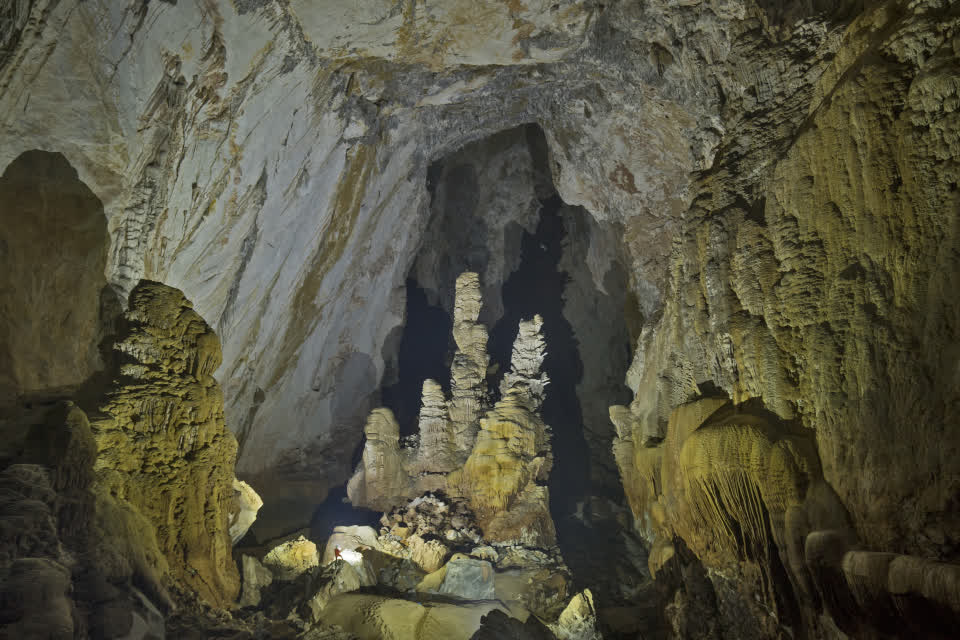
Son Doong Cave . A Landscape That Feels Geologically Impossible
Son Doong Cave is often introduced with a dramatic statistic: the largest cave in the world.
The number alone does not prepare people for the scale.
Located inside Phong Nha - Ke Bang National Park, the cave formed millions of years ago as river water slowly eroded limestone beneath the mountains. Over time, sections of the ceiling collapsed, allowing jungle ecosystems to grow inside the cave itself.
That detail changes everything.
This is not simply a cave. It behaves like an underground world with its own weather, rivers, cliffs, clouds, and ecosystems. Some chambers rise more than 200 meters high. Stalagmites tower like stone buildings. Underground rivers cut through darkness while shafts of sunlight create isolated pockets of rainforest beneath collapsed ceilings.
One explorer famously described the experience online:
“It felt less like entering a cave and more like discovering a lost planet.”
That description may sound exaggerated until you see photographs of human figures standing beside formations so large they appear digitally altered.
And yet, media coverage often reduces Son Doong to spectacle alone.
The more important reality is logistical and environmental.
Access remains heavily controlled to reduce ecological damage. Expeditions require physical endurance, weather flexibility, and responsible planning. Travelers expecting easy tourism infrastructure misunderstand the experience immediately.
Son Doong is not designed for mass tourism.
That limitation is part of why it still feels extraordinary.
Sung Sot Cave . The Theater Inside Ha Long Bay
Among the limestone formations of Ha Long Bay, Sung Sot Cave remains one of the most visited cave systems.
Its name translates roughly to “Surprise Cave,” which initially sounds like standard tourism branding. Then visitors enter.
The cave opens gradually. Narrow entrances suddenly expand into enormous illuminated chambers that resemble a natural amphitheater more than a geological formation. Fluorescent lighting reflects across stalactites while ceilings rise nearly thirty meters above the ground.
The atmosphere feels theatrical.
Travel videos often romanticize the visual beauty while ignoring practical realities. During peak tourist hours, large tour groups can overwhelm the quieter aspects of the cave experience. Noise echoes aggressively through enclosed chambers. Artificial lighting, while visually striking, also changes how visitors emotionally perceive the cave compared to untouched systems like Son Doong.
That contrast matters.
Sung Sot Cave represents a different philosophy of tourism — accessibility over isolation.
Neither approach is inherently better. They simply create different relationships between travelers and nature.
Cu Chi Tunnels . Tourism And Memory Existing Together
Cu Chi Tunnels attracts visitors for historical reasons, but many leave emotionally affected in ways they did not expect.
The tunnel network stretches roughly 250 kilometers underground and played a major role during the Vietnam War. Entire communities survived below the surface for extended periods. Hospitals, kitchens, planning rooms, storage areas, and living quarters existed within narrow underground corridors built largely by hand.
Modern visitors can crawl through sections of the tunnels themselves.
That experience changes historical abstraction into physical understanding very quickly.
The tunnels are cramped, hot, dark, and psychologically intense even after being widened for tourists. Crawling underground for only several minutes leaves many visitors imagining what daily survival must have felt like during wartime conditions.
And this is where travel becomes more complicated than sightseeing.
Cu Chi forces travelers to confront how tourism transforms spaces connected to trauma and conflict. Some visitors appreciate the educational value deeply. Others feel uncomfortable with souvenir shops or shooting ranges located near historical memorial areas.
Both reactions are understandable.
Historical tourism rarely fits neatly into entertainment.
Things The Media Doesn’t Tell You
Travel content about Vietnam’s underground attractions often focuses heavily on visual spectacle.
Gigantic caves. Wartime tunnels. Dramatic lighting.
The practical and emotional realities receive far less attention.
Before visiting these locations, travelers should gather “real data” from multiple sources rather than depending entirely on tourism marketing:
- Read recent negative reviews discussing crowd conditions and physical difficulty
- Watch unedited walking videos on YouTube instead of cinematic edits
- Browse Reddit or Facebook travel groups for weather updates and access changes
- Search TikTok clips filmed during rainy season or peak tourism periods
- Look for comments from travelers with claustrophobia or mobility concerns
Why is this important?
Because underground destinations affect people differently.
Some travelers feel awe. Others experience anxiety inside enclosed spaces. Heat, humidity, steep stairways, darkness, and slippery surfaces become serious factors depending on the destination.
Planning psychologically matters as much as planning physically.
Vinh Moc Tunnels . A Different Kind Of Wartime Memory
Vinh Moc Tunnels receives fewer international visitors than Cu Chi, yet many experienced travelers consider it equally powerful.
Unlike Cu Chi’s guerrilla warfare associations, Vinh Moc tells a civilian survival story. Residents spent months constructing a three-level tunnel system reaching depths of roughly twenty-three meters underground. Entire families lived there during periods of intense bombing.
Seventeen children were reportedly born inside the tunnels.
That single detail transforms the site emotionally.
The tunnels stop feeling like military infrastructure and begin feeling like an underground village built out of necessity. Small family chambers branch from narrow corridors while ventilation shafts connect hidden life below to danger above.
The atmosphere feels quieter than Cu Chi.
Less theatrical. More intimate.
Travelers often describe Vinh Moc as emotionally heavier because daily civilian survival becomes easier to imagine there.
Thang Long Imperial Citadel . Archaeology Beneath Modern Hanoi
Thang Long Imperial Citadel reveals another type of underground discovery entirely.
Beneath modern Hanoi lies layer upon layer of Vietnamese political and cultural history stretching across centuries. Excavation areas uncovered foundations, roads, drainage systems, wells, ceramics, roof tiles, jewelry, stone columns, animal bones, and architectural remnants dating from the 7th through 19th centuries.
This site changes how travelers understand Asian cities.
Modern Hanoi is not simply built beside history. It is built directly on top of it.
Walking through excavation zones creates a strange temporal overlap. Scooters roar through nearby streets while archaeologists continue studying traces of dynasties buried beneath the capital.
The media often treats archaeological tourism as passive observation. In reality, sites like Thang Long provoke deeper questions about urban development, preservation, and national identity.
How much history can a rapidly modernizing city realistically protect?
Vietnam continues negotiating that balance in real time.
The Forgotten Bunker Beneath The Metropole Hotel
Luxury hotels rarely market themselves through wartime history.
Yet beneath Sofitel Legend Metropole Hanoi lies one of the city’s most unusual hidden spaces.
During renovations in 2011, workers rediscovered a bomb shelter forgotten beneath the hotel for decades. The underground structure includes narrow corridors and protected rooms preserved largely in original condition.
What makes the bunker fascinating is contextual contrast.
Above ground sits one of Hanoi’s most elegant colonial-era hotels. Below ground exists a survival space connected to periods of air raids and political uncertainty.
A verified historical account states that American singer Joan Baez sheltered there during bombing campaigns in 1972.
That detail collapses geopolitical distance instantly.
The bunker reminds travelers that luxury and conflict often coexist geographically far closer than tourism narratives admit.
Vietnam Underground Feels Different Because History Still Feels Alive
Many countries preserve underground attractions as distant historical artifacts.
Vietnam often feels different.
The emotional connection between past and present remains highly visible. War memories still shape families. Urban development continues uncovering older layers of history. Caves remain tied to environmental debates and conservation efforts rather than only tourism marketing.
That living connection changes the experience fundamentally.
Travelers do not simply observe Vietnam’s underground spaces.
They move through places where geology, memory, conflict, survival, and modernization continue intersecting today.
And that complexity is precisely what makes these destinations impossible to forget.
The Vietnam Most Travelers Never Expect To Discover.
Son Doong Cave, Cu Chi Tunnels, Vietnam caves, Ha Long caves, Sung Sot Cave, Vinh Moc Tunnels, Thang Long Citadel, Vietnam underground, Phong Nha caves, Hanoi history, Vietnam wartime sites, underground Vietnam, Vietnam travel guide, cave exploration Vietnam, Metropole bunker
