
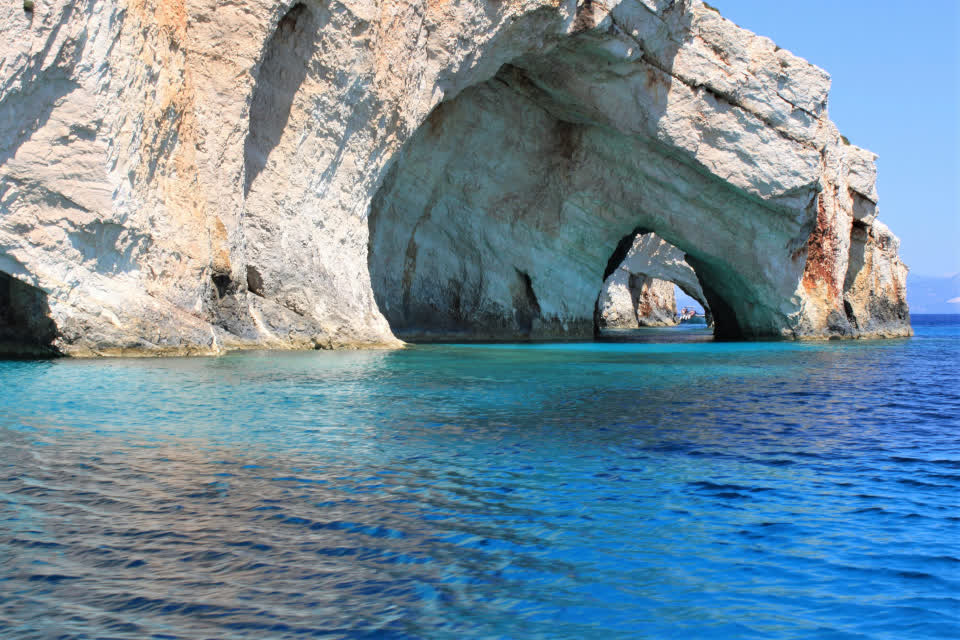
Papafragas Beach - The Secret Sea Cave In Greece That Looks Like A Natural Infinity Pool
Some places announce themselves loudly. Santorini arrives with white hotels and cruise ships. Mykonos arrives with beach clubs and late-night music. Milos does something quieter.
You notice it gradually.
The volcanic cliffs appear first. Then the pale stone landscapes. Then the water — impossibly clear, shifting from turquoise to emerald depending on the angle of the sun. And finally, somewhere along the northern coastline of the island, you arrive at Papafragas Beach, a narrow sea inlet hidden between giant rock walls where the Aegean Sea pushes itself into a cave like a secret trying to remain undiscovered.
Papafragas is not a conventional beach. It feels more like geology performing theater.
Located on Milos Island in Greece, Papafragas sits beneath steep volcanic cliffs shaped over centuries by wind and saltwater erosion. From above, the narrow opening resembles a crack in the coastline. But once you descend toward the water, the landscape changes entirely. The sea enters through a slim channel, opening into a protected lagoon framed by pale stone walls and sea caves.
The result looks almost artificial, as if someone carved a hidden swimming pool directly into the island.
But nothing here was designed. That is precisely what makes it memorable.
Milos Is Greece Before The Postcard
Milos was formed by volcanic activity thousands of years ago, and unlike more commercial Greek islands, much of its identity still feels tied to geology rather than luxury tourism.
Travelers often describe the island as cinematic because the landscapes change abruptly from one bay to another. One stretch of coastline resembles lunar terrain. Another feels Caribbean. Another looks closer to Icelandic cliffs than the Mediterranean.
Papafragas may be the island’s most visually striking location because it compresses all those elements into one small area: volcanic rock, sea caves, crystal water, archaeological history, and dramatic elevation.
A European travel photographer once described Milos this way:
“Milos doesn’t look designed for tourism. It looks designed for light.”
That becomes obvious around Papafragas, especially in late afternoon when sunlight reflects against the cave walls and changes the water into shifting layers of blue and green.
The Beach Beneath The Cave
The first thing many visitors underestimate is how small Papafragas actually is.
This is not a wide sandy beach where you spread towels for hours. The sandy section is narrow, squeezed between rock formations shaped by ancient volcanic forces. During windy days, waves can push directly into the inlet and dramatically alter conditions.
That changing relationship between sea and stone gives Papafragas its personality.
The caves surrounding the beach once served as hiding places for pirates during the Byzantine period. Local stories still reference smugglers and sailors using the narrow channels as shelter from storms or patrol routes.
Standing above the cliffs today, it is easy to understand why.
From sea level, the cave entrance becomes almost invisible from certain angles. The rock formations protect the inner section of the beach while allowing enough seawater to flow through that the lagoon remains clear and constantly refreshed.
The water itself becomes part of the attraction. Depending on weather and sunlight, it changes color throughout the day — pale turquoise in the morning, deep sapphire under cloud cover, bright emerald near sunset.
Even experienced Mediterranean travelers often pause here longer than expected.
Things The Media Doesn't Tell You
Most social media posts present Papafragas as a flawless hidden paradise. Reality is more nuanced, and understanding those details can completely change how you plan the trip.
Access Requires Caution
Papafragas is beautiful partly because it remains physically awkward to access.
The descent toward the beach involves steep rock steps and uneven surfaces. During peak summer months, the rocks become slippery from sunscreen, sea spray, and foot traffic.
This is not an ideal location for travelers with mobility limitations or anyone expecting organized beach infrastructure.
Several recent travel vlogs and Google Maps reviews mention that visitors underestimate the climb back up in high temperatures.
Wind Changes The Experience
The Aegean wind matters here more than Instagram suggests.
On calm days, Papafragas resembles a natural swimming pool. On windy afternoons, waves can become rough and swimming conditions shift quickly inside the narrow channel.
Before visiting, experienced travelers often check local weather forecasts, drone footage on YouTube, or recent TikTok uploads from Milos travelers to evaluate sea conditions in real time.
The Crowds Arrive Fast
Papafragas photographs well, which means timing becomes essential.
By midday during summer, the viewpoint area can become crowded with day-trippers arriving by rental scooters, cars, and organized island tours.
Late May and early June are often considered the best compromise between weather and manageable visitor numbers. Early morning also changes the atmosphere completely.
One Greek travel planner explained it bluntly:
“Papafragas is most magical before people start speaking loudly.”
There Are No Full-Service Facilities
This surprises some travelers.
The beach itself is largely natural terrain. Visitors should bring water, proper footwear, and sun protection. The beauty of Papafragas comes partly from the absence of commercial development directly inside the cove.
That lack of infrastructure also means the area feels less sanitized than famous beaches elsewhere in Greece.
The Ancient City Beside The Sea
One detail many visitors overlook is that Papafragas sits close to one of the most important archaeological sites in the Cyclades: Phylakopi.
The prehistoric settlement developed from the Neolithic period and became a significant Bronze Age center in the Aegean world. Today, much of the ancient city lies underwater, but visible stone walls and excavation zones remain near the coastline.
This combination — sea caves beside submerged civilization — changes the emotional texture of the visit.
Papafragas is not simply a beach destination. It is also a place where geology and human history overlap.
Archaeology enthusiasts often spend hours around the surrounding cliffs imagining how ancient communities interacted with these same waters thousands of years ago.
The coastline still carries traces of that older world.
Why Papafragas Feels Different From Other Greek Beaches
Many Mediterranean beaches compete through comfort: larger resorts, better cocktails, softer sunbeds.
Papafragas competes through atmosphere.
You arrive not to consume a beach experience, but to enter a landscape that still feels partially uncontrolled.
The cliffs create shifting shadows across the water. Wind echoes through the rock channels. Boats occasionally pass beyond the cave opening like moving fragments of another world.
There is also scale distortion here. From above, the beach appears tiny. From inside the cave, the cliffs suddenly feel enormous.
That visual compression creates a strange psychological effect. Visitors often stay longer than planned because the location keeps changing depending on angle, tide, and light.
Staying Near Papafragas
Accommodation around Milos ranges from basic family-run guesthouses to high-end boutique hotels, particularly near Apollonia and Pollonia.
Papafragas remains accessible through the island’s main road network, making it relatively easy to combine with nearby beaches and archaeological sites in one day.
But staying overnight near the northern coast changes the rhythm of the experience.
Early mornings reveal a completely different landscape. The sea becomes calmer. The cliffs soften under pale sunlight. Fishing boats move slowly along the coast before tourist traffic begins.
Travelers who rush through Papafragas as a quick photo stop often miss the atmosphere that makes Milos distinctive.
Community Impressions From Recent Travelers
Recent visitor discussions across travel forums, YouTube comments, and European backpacking groups reveal a surprisingly consistent pattern.
People rarely describe Papafragas as “relaxing.”
Instead, they describe it as unforgettable.
One traveler wrote:
“It felt like discovering a place accidentally.”
Another described the cave as:
“The kind of beach that makes you rethink how strange coastlines can be.”
That sense of geological surprise is what continues attracting travelers to Milos even as other Greek islands become increasingly commercialized.
The Best Time To Visit
Late May remains one of the smartest periods to visit Papafragas.
The temperatures are comfortable. The sea begins warming. Wildflowers still appear across sections of Milos. Most importantly, visitor numbers remain lower than peak July and August crowds.
September is another strong option, especially for photographers and slower travelers.
Midday visits during peak summer can become physically exhausting due to exposed rock surfaces and limited shade. Early morning or late afternoon provides softer light and a more manageable atmosphere.
And in a place shaped so heavily by light, shadows, and water color, timing changes everything.
The Wild Side Of Greece - Exploring Papafragas And Ancient Phylakopi.
Papafragas Beach, Milos Island, Greece cave beach, Milos travel guide, Papafragas Greece, Greek sea caves, Aegean beaches, Phylakopi ruins, volcanic island Greece, Greece hidden beaches, Milos coastline, cave beach Europe, Greece island travel, Papafragas lagoon, Mediterranean cave beach
