
The Data Center Backlash Is Turning Big Tech’s AI Boom Into a Local Political Fight
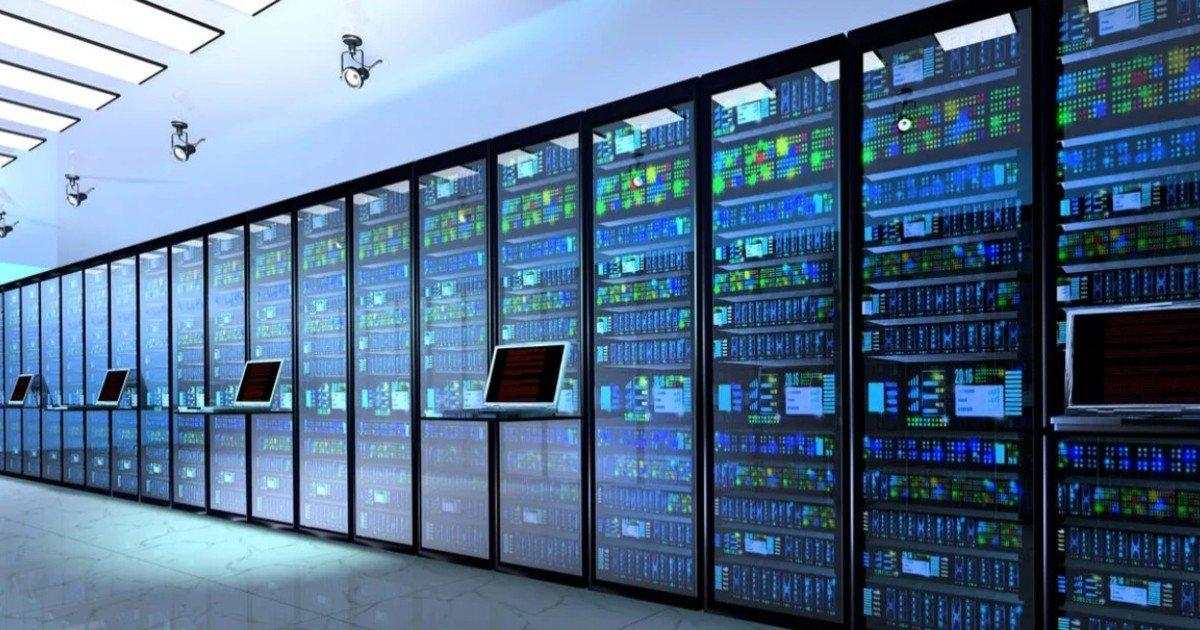
The artificial intelligence boom has a physical problem. Behind every chatbot response, AI-generated image, and automated business process sits a network of powerful computers that needs enormous amounts of electricity, cooling, land, and water.
The Hyperscale Problem Behind the Generative AI Revolution
For years, data centers were largely invisible to the public. They operated behind security fences, far from everyday conversations about technology. That is changing. As technology companies race to build larger facilities, local communities are beginning to ask difficult questions. Who pays for the electricity? Where does the water come from? What happens to the environment? And who actually benefits?
The debate is no longer limited to environmental activists or technology critics. Data centers are becoming a political issue because their effects are increasingly being felt in people's daily lives.
The AI Infrastructure Boom Has Become a Community Issue
In an interview about his book Hyperscale, journalist Paris Marx described the rapid expansion of data centers as unsustainable and argued that the facilities have become a visible target for wider frustration with the technology industry.
The reason is simple. People may disagree about artificial intelligence, social media, or the future of technology, but they can understand a higher electricity bill, pressure on local water supplies, and constant noise from industrial cooling equipment.
The backlash is also crossing political boundaries. Opposition to data centers has attracted people with very different political views, including figures such as Ron DeSantis and Bernie Sanders.
That matters because it changes the nature of the debate. This is no longer just a discussion about whether AI is useful or dangerous. It is about whether local communities should accept the costs of infrastructure built to support the ambitions of some of the world's largest technology companies.
Three Cases Show the Scale of the Problem
The concerns described in the interview are not theoretical.
In Ireland, data centers already consume more than 20% of the country's electricity. Their growing demand has placed pressure on the power grid and contributed to concerns about electricity prices. In 2022, the grid operator introduced a moratorium on new data center grid connections around Dublin.
In The Dalles, Oregon, Google faced questions about how much water its facilities were using. When a journalist sought information from the city, the company responded with a lawsuit rather than making the information available. About a year later, Google disclosed that its data centers were using 29% of the city's water.
In Chile, communities around Santiago raised concerns about water availability as companies including Google and Microsoft developed data center projects.
These examples reveal a common problem. A facility may look like a private business investment, but its resource requirements can affect an entire region.
The expansion of generative AI has made the issue more urgent. Data centers existed long before ChatGPT, but the race to build infrastructure for AI has increased the scale and speed of development.
The Real Product Behind AI Is Computing Infrastructure
People often think of AI as software. They see an app, a chatbot, or a tool that can write emails and analyze documents.
But AI is also an infrastructure business.
A technology company needs servers, networking equipment, buildings, electricity, cooling systems, and secure facilities to deliver AI services at scale. These are expensive assets that must operate continuously.
The business opportunity is clear. Companies that control the infrastructure can provide the computing capacity needed by AI developers, businesses, and consumers. More computing capacity can support more services, more customers, and potentially more revenue.
But the cost does not stop at purchasing servers and constructing buildings. Data centers also depend on local power networks, water resources, land, and public infrastructure.
This creates a gap between the digital product customers see and the physical resources required to deliver it.
For a large technology company, a new data center may be a strategic investment. For the surrounding community, it may mean increased pressure on electricity, water, roads, and the local environment.
The economic question is therefore bigger than whether AI companies can make money. It is whether the value created by AI justifies the resources consumed to build and operate it.
Cooling Systems Reveal the Trade-Offs
One of the most important details in the interview concerns how data centers manage heat.
Servers generate large amounts of heat while processing information. Without effective cooling, equipment can overheat and fail.
Traditional evaporative cooling systems use water that absorbs heat and then evaporates. This means the facility needs a continuing supply of water.
Some companies are moving toward closed-loop cooling systems. These systems keep a certain amount of water circulating inside the facility rather than continually consuming water through evaporation.
At first glance, this sounds like a straightforward improvement. Less water use should mean less pressure on local water supplies.
But there is a trade-off. Closed-loop systems can require more electricity to keep the circulating water cool. They may also involve chemical coolants, creating concerns about leaks and possible contamination.
In other words, reducing one environmental cost does not automatically eliminate the others.
This is an important lesson for the entire AI industry. A solution should be judged by its total impact, not by one attractive number in a corporate announcement.
Transparency Is Becoming a Business Requirement
Technology companies are beginning to respond to public resistance.
Microsoft, Amazon, and OpenAI have discussed commitments not to use non-disclosure agreements in negotiations with local governments. Companies have also talked about paying for more of the electricity infrastructure required by their facilities and adopting different cooling systems.
These changes may help, but they do not resolve the underlying conflict.
Greater transparency is useful because residents need to understand what is being built in their communities. However, removing confidentiality agreements does not automatically make a project sustainable or fair.
There is also a business reason for companies to become more open. When residents discover that a major project is being negotiated behind closed doors, suspicion grows. A company may believe secrecy protects a deal, but it can also make the project politically harder to approve.
The public response described in the interview suggests that technology companies are increasingly trying to shape the conversation themselves. They argue that environmental concerns may be exaggerated or that new technology can reduce the damage.
But local communities are not necessarily interested in national averages. A country may have plenty of water overall while a particular town faces serious water shortages.
The location matters.
A data center that is manageable in one region may create significant pressure in another. That is why local evidence is more useful than broad comparisons that hide differences between communities.
The Larger Risk Is Losing Public Trust
The data center debate is part of a wider reaction against the physical presence of the technology industry.
The interview also points to opposition involving surveillance cameras, smart glasses, and self-driving vehicles. These products bring technology directly into public spaces and people's daily lives.
This is an important shift.
For years, many digital services were easy to ignore. If someone disliked an app, they could delete it. But removing an app does not change the infrastructure or business decisions behind it.
A data center, a surveillance camera network, or a fleet of autonomous vehicles is different. These systems occupy physical space and can affect people who never chose to use them.
The problem becomes even more serious when people believe the benefits are unclear.
Supporters of generative AI have presented it as a technology that could improve productivity and transform services such as healthcare and education. Yet the interview raises doubts about whether those promised benefits have reached the public at a scale that justifies the growing environmental and social costs.
The result is a trust problem. People are being asked to accept visible costs today in exchange for benefits that may arrive later.
That is a difficult argument for any company to sell.
The Technology Divide Between the United States and China Adds Another Challenge
The interview also raises a wider question about digital sovereignty and dependence on major US technology companies.
Some governments and organizations want greater control over the digital systems they depend on. They may seek alternatives to foreign cloud platforms and technology services, including systems developed closer to home.
This discussion matters in an era when the United States and China are developing increasingly separate technology ecosystems. AI, computing infrastructure, chips, cloud services, and digital platforms are becoming part of broader questions about economic and strategic independence.
But changing the supplier does not necessarily change the business model.
A country could replace a US technology provider with a domestic company that builds the same kind of infrastructure, consumes similar amounts of electricity and water, and gives local communities little influence over decisions.
That would change who earns the money, but not necessarily who carries the cost.
The more important question is what kind of technology system a society wants to build. Digital independence should not simply mean replacing one powerful company with another. It should also mean creating systems that serve public needs, protect local resources, and distribute benefits more fairly.
The interview points to public-sector technology development in Europe as one possible direction. Governments could invest in digital services and infrastructure that they need themselves, rather than relying entirely on private technology companies.
That approach does not mean private companies have no role. It means public institutions should have meaningful alternatives and enough control to protect the interests of the people they serve.
What This Means for Businesses
For large companies, the data center backlash creates new costs and planning risks.
A project may require more time to secure approval, more investment in local power infrastructure, better cooling technology, and stronger public communication. Companies that ignore local concerns may face delays, political opposition, or damage to their reputation.
For smaller businesses, the impact is less direct but still important.
Electricity prices affect operating costs. Cloud services and AI tools depend on infrastructure that may become more expensive as demand grows. Businesses that rely heavily on a single technology provider may also face greater exposure to outages, pricing changes, and shifts in platform policy.
The recent examples discussed in the interview, including a Microsoft outage and concerns about schools being pressured to adopt Google's AI tools, illustrate a broader dependency problem. When essential services rely heavily on a small number of technology companies, those companies gain significant influence over how businesses and institutions operate.
Small businesses rarely have the resources to build their own infrastructure. They need to be careful about becoming too dependent on one provider.
What Small Businesses Should Do Now
Small and medium-sized businesses do not need to oppose AI or avoid cloud technology. These tools can still save time, reduce repetitive work, and help small teams compete with larger organizations.
But they should adopt them with a clear understanding of cost and dependency.
First, calculate the real value of AI tools. A subscription is not automatically a good investment. Measure whether it reduces working hours, improves customer service, or increases sales. If the benefit cannot be identified, reconsider the expense.
Second, avoid relying on only one platform for essential business operations. Keep copies of important files, maintain access to customer records, and understand how to move data if a provider changes its prices or services.
Third, use AI where it solves a specific problem. A small retailer might use it to prepare product descriptions or answer common customer questions. A service business might use it to organize appointments or draft routine messages. There is no need to adopt every new tool simply because competitors are discussing it.
Fourth, pay attention to the infrastructure behind digital services. Cloud providers and AI platforms may appear interchangeable, but their reliability, pricing, data policies, and long-term direction can differ.
Finally, support transparency. Businesses should ask technology providers how customer data is handled, where critical services are hosted when that information is available, and what happens if a platform becomes unavailable.
If I Ran a Micro or Small Business
I would not try to compete with large technology companies by spending more on AI. I would compete by using technology more carefully.
My first priority would be to identify the three activities that consume the most time without creating much value. Those might include answering repetitive customer questions, preparing reports, or organizing orders.
I would test AI tools against those specific tasks and keep only the ones that produce measurable improvements.
I would also avoid building my entire business around a single AI platform. If the provider increases its price, changes its terms, or experiences an outage, the business should still be able to serve customers.
Most importantly, I would treat technology as a tool rather than a business strategy by itself.
A small company does not need the biggest AI model, the most expensive subscription, or the most complicated automation system. It needs reliable tools that help it earn money, serve customers, and control costs.
The same principle applies to the wider technology industry. Bigger infrastructure is not automatically better infrastructure. More computing power is not automatically more public value.
The Future of AI Must Be Built With People in Mind
The data center backlash exposes a weakness in the way the technology industry often describes progress.
Companies talk about a future in which AI becomes more powerful, more widely available, and deeply integrated into everyday life. But that future requires physical resources, local infrastructure, and public acceptance.
The people living near data centers are asking a reasonable question. If the benefits are global and the costs are local, who is responsible for making the arrangement fair?
The answer cannot simply be more construction, better marketing, or a promise that future technology will solve today's problems.
AI infrastructure needs to be efficient, transparent, and appropriate for the communities where it operates. Governments also need the ability to develop and maintain public-interest technology rather than depending entirely on a handful of private platforms.
The next stage of the AI race will not be decided only by faster chips or larger models. It will also depend on energy, water, trust, and the ability to build infrastructure that people are willing to live alongside.
Technology should improve people's lives. If the physical cost of building it becomes greater than the value people receive, the industry will face a much harder question than how to scale.
It will have to explain why that scale is necessary in the first place.
The Hyperscale Problem Behind the Generative AI Revolution
AI data centers, data center backlash, AI infrastructure, hyperscale data centers, data center energy use, data center water use, generative AI costs, AI environmental impact, Big Tech regulation, digital sovereignty, AI business impact, sustainable data centers, small business AI, technology infrastructure
