
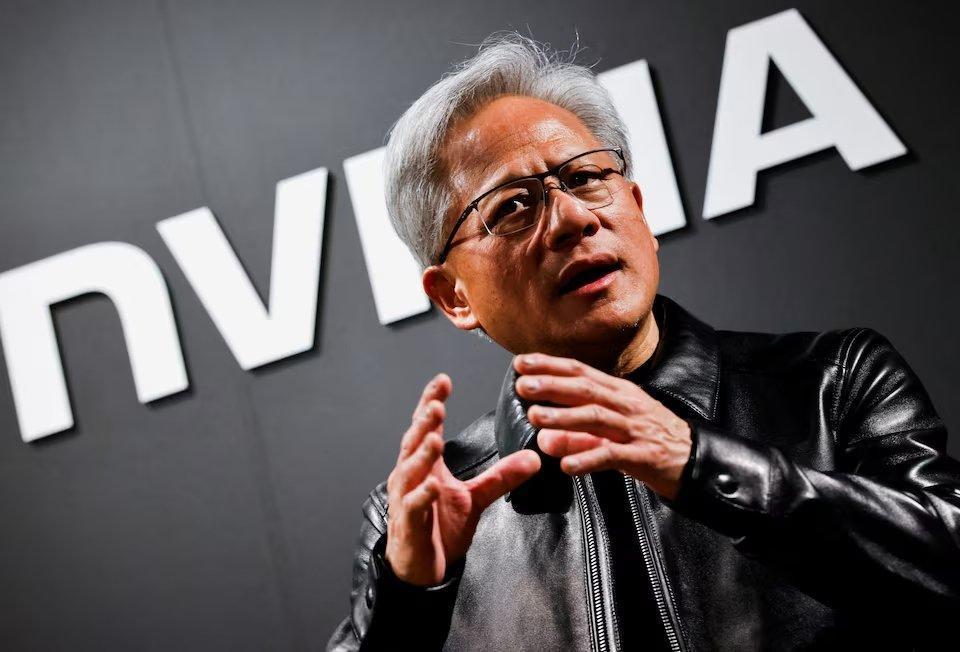
Jensen Huang Returns to Nvidia as Elon Musk Celebrates and Washington Questions National Security
Nvidia is not an ordinary technology company anymore. Its chips power much of the artificial intelligence industry, its products influence the direction of global computing, and its business decisions have become increasingly connected to national security.
Nvidia Investors Celebrate Stability While US Senators Demand Answers
That is why the return of Jensen Huang as Nvidia's CEO and president has attracted attention far beyond Silicon Valley.
Elon Musk celebrated the decision. Sam Altman acknowledged how difficult it would be to imagine the AI industry without Huang. Investors welcomed signs of stability, while several US senators continued demanding answers about national security concerns and Nvidia's chip operations.
The immediate leadership uncertainty may be over, but the larger problem remains.
When one company becomes essential to the global AI economy, its leadership is no longer just a corporate matter. It becomes a question of shareholders, governments, geopolitical competition, and the future of technology.
Jensen Huang Returns to Nvidia as Technology Leaders Celebrate
Jensen Huang was reinstated as Nvidia's CEO and president on Monday morning, according to the original report.
The decision attracted support from several prominent technology executives.
Elon Musk was among the strongest supporters of Huang's return. After the announcement, Musk wrote on X that the mistake had been corrected.
At the DealBook Summit the previous week, Musk had compared removing Huang during Nvidia's successful period to removing Michael Jordan from a winning basketball team.
His argument was straightforward. Removing an important leader from a successful company could damage shareholder interests.
OpenAI CEO Sam Altman took a more measured position. He said it was difficult to imagine the AI industry without Jensen Huang.
After the reinstatement, Altman posted a brief message celebrating Huang's return.
Other executives also expressed support.
Changpeng Zhao, the Binance co-founder and former CEO, welcomed Huang back. Epic Games CEO Tim Sweeney also supported the decision, having joined an open letter signed by approximately 200,000 people calling for Huang's reinstatement.
Former Uber CEO Travis Kalanick, another signatory, also voiced support.
The reactions show how important Huang has become to the technology industry.
For many technology leaders, his experience and leadership represent an important part of America's ability to compete in AI.
However, support from Silicon Valley does not automatically resolve the concerns raised by Washington.
Nvidia's Leadership Crisis Reveals a Bigger Problem in the AI Industry
The most important issue is not simply whether Huang should remain CEO.
It is how much influence one person can have over a company that sits at the center of the global AI supply chain.
Nvidia supplies the computing hardware used by AI developers, cloud providers, research institutions, and major technology companies.
Its graphics processing units are essential for training and operating many advanced AI systems.
This gives Nvidia an unusually important position.
When the company experiences leadership uncertainty, the consequences can extend beyond its employees and shareholders.
Investors may reconsider their expectations. Customers may worry about supply continuity. Governments may examine whether changes in leadership could affect technology exports and national security.
The original report also describes serious allegations involving Huang, including an alleged relationship with a Chinese spy, alongside multiple congressional investigations.
These allegations and security concerns should be distinguished from established findings. The report does not establish that Huang committed espionage or that Nvidia's reinstatement decision resolved the congressional concerns.
That distinction matters.
A technology company can make a leadership decision based on its business interests while governments continue investigating separate national security questions.
The two issues are connected, but they are not identical.
Nvidia's Stock Reaction Shows How Much Investors Value Leadership Stability
The financial reaction provides another important part of the story.
According to the original report, Nvidia's stock declined after Huang's removal and began recovering when his return was announced.
Billionaire investor Bill Ackman criticized the board's earlier decision, arguing that it was not acting in shareholders' best interests or meeting its fiduciary responsibilities.
When the stock began recovering, Ackman described the result as the wisdom of the crowd prevailing.
The reaction highlights three important business realities.
Leadership affects investor confidence.
Investors do not evaluate companies only through revenue, profits, and market share. They also evaluate management quality and the stability of the people responsible for executing the strategy.
Nvidia has a concentrated leadership identity.
Huang is closely associated with Nvidia's technology strategy, corporate culture, and long-term development.
His influence is difficult to separate from the company's identity.
The AI industry depends on confidence.
Customers investing heavily in AI infrastructure want to believe that their suppliers will remain stable and capable of delivering products over many years.
A leadership crisis can introduce uncertainty into those decisions.
However, a stock recovery does not prove that every concern has disappeared. It simply shows that investors reacted positively to the reinstatement.
The National Security Debate Is Not Over
While technology executives celebrated Huang's return, some US politicians remained skeptical.
Senator John Cornyn questioned the claim that the reinstatement did not create a national security risk.
Senator Pete Ricketts also stated that Nvidia's decision did not remove Huang's responsibility to testify before Congress.
He specifically raised concerns about national security and unaccounted-for chips.
According to the original report, Huang is still expected to appear publicly before the Senate Banking Committee on December 3 and privately before three House committees.
This is a significant detail.
The company's leadership decision does not end congressional oversight.
The United States increasingly treats advanced AI chips as strategic technology. Access to computing power can influence military research, economic competitiveness, scientific development, and the ability to build advanced AI systems.
This creates a difficult situation for Nvidia.
The company wants to sell products and expand its global business. The US government wants to protect sensitive technology and maintain its competitive position.
These objectives can conflict.
China remains an important part of the broader technology debate because access to advanced computing hardware has become a central issue in the competition between the two countries.
For Nvidia, the challenge is not simply building faster chips.
It must also operate within an increasingly complicated political and regulatory environment.
Nvidia's Business Model Is Becoming More Than Selling AI Chips
Nvidia's economic importance comes from its position in the AI infrastructure market.
Its business is connected to several layers of the technology industry.
-
Semiconductor design provides the computing hardware.
-
Software and development tools help customers use that hardware.
-
Data centers provide the infrastructure required to operate AI systems.
-
Cloud providers make computing resources available to businesses.
-
AI developers use that infrastructure to build commercial products.
This creates an ecosystem in which Nvidia benefits from the growth of AI across multiple industries.
As demand for AI computing increases, the importance of Nvidia's products also increases.
But this position creates a different kind of business risk.
The company cannot make decisions based only on customer demand and product performance.
It must also consider export restrictions, government investigations, international relationships, and the political consequences of selling advanced technology across borders.
The larger Nvidia becomes, the more its business decisions can affect national economic interests.
That is the central tension.
Nvidia is a private company, but its technology has become strategically important to the United States.
The US-China AI Divide Creates a New Challenge for Technology Companies
The AI industry is increasingly developing along two different technological paths.
The United States has major companies building advanced AI models, semiconductor technology, cloud infrastructure, and software platforms.
China is also developing its own AI models, semiconductor capabilities, cloud systems, and domestic technology supply chains.
The two countries do not operate in completely separate technology worlds, but restrictions and strategic competition are pushing their ecosystems in different directions.
Nvidia sits directly in the middle of this challenge.
Its products are commercially valuable across international markets, but access to its most advanced computing technology is also a matter of national policy.
This creates three strategic pressures.
Market access
Nvidia needs customers around the world to support its growth. Restrictions can limit the markets in which certain products can be sold.
Technology control
Governments want to prevent sensitive computing technology from reaching organizations or markets that could create security risks.
Supply chain independence
Both the United States and China have incentives to develop stronger domestic semiconductor capabilities.
For Nvidia, this means the future is not determined only by technological performance.
Political decisions can influence which customers it serves, which products it sells, and where future growth comes from.
For smaller businesses, this separation matters too.
Companies that depend on AI services should avoid building their entire operations around a single provider or technology ecosystem without understanding the risks.
What Small and Medium-Sized Businesses Should Learn From Nvidia
Most small businesses will never need to manufacture advanced AI chips.
But they can learn important lessons from Nvidia's situation.
Technology dependence creates business risk.
A company that relies entirely on one AI platform may face unexpected price changes, service interruptions, regional restrictions, or changes in product availability.
This is particularly important for businesses operating internationally.
A practical strategy should include several priorities.
Avoid depending on one AI provider
Where possible, understand alternative models and services that can support important business operations.
Keep control of business data
Store important documents, customer information, and operational records in systems that the business can manage independently.
Understand regional restrictions
Before choosing AI services, examine where data is processed, which markets are supported, and whether the service can meet the company's legal and operational requirements.
Calculate the real cost of AI
A tool that appears inexpensive initially may become costly when usage increases.
Businesses should measure the total cost against the time and money saved.
Separate essential operations from experimental AI projects
Do not allow an experimental AI system to become the only way to access critical business information or serve customers.
These decisions do not require a large technology budget.
They require planning.
If I Were Running a Small or Micro Business, I Would Focus on Independence
For a small business with limited money and employees, the biggest mistake would be trying to predict which country or AI company will dominate the industry.
That is not a decision a small business can control.
What it can control is how dependent its operations become on external technology.
I would take five practical steps.
Build around business needs, not AI brands.
Choose tools because they solve specific problems, not because a famous technology company has launched them.
Keep important information portable.
Customer records, financial documents, product information, and internal processes should not exist only inside one AI platform.
Use more than one technology where necessary.
A business might use one AI service for writing, another for coding, and traditional software for financial operations.
The objective is not to collect tools. It is to avoid having one provider become a single point of failure.
Monitor technology costs and restrictions.
Review subscriptions, usage limits, regional availability, and changes to service conditions regularly.
Invest in people who understand the business.
AI can help employees work faster, but someone must still understand customers, finances, operations, and the consequences of important decisions.
For a micro business, technology independence does not mean building everything yourself.
It means retaining enough control to continue operating if a provider changes its prices, policies, or services.
Jensen Huang's Return Does Not End Nvidia's Biggest Challenge
Jensen Huang's reinstatement brings leadership stability back to Nvidia, and the positive reactions from prominent technology executives show how much confidence the industry places in him.
But the congressional questions remain.
The expected Senate testimony and additional private hearings demonstrate that Nvidia's responsibilities extend beyond its shareholders and commercial customers.
The company operates in an industry where computing power has become an economic and national security asset.
That changes the rules of business.
For investors, leadership stability matters. For customers, reliable supply matters. For governments, technology control matters. For Nvidia, all three must be managed at the same time.
The broader lesson is equally important for smaller companies.
The future of AI will not be shaped only by who builds the best models or the fastest chips. It will also be shaped by who controls the infrastructure, who can access the technology, and how businesses manage their dependence on global technology providers.
Jensen Huang may be back in charge of Nvidia, but the bigger battle is about who controls the computing power that will shape the next generation of the global economy.
Jensen Huang Is Back at Nvidia but the Political Battle Over AI Chips Is Far From Over
Jensen Huang, Nvidia CEO, Nvidia leadership, Elon Musk Nvidia, Nvidia stock, AI chip industry, US China AI, AI national security, semiconductor industry, Nvidia controversy, AI infrastructure, technology geopolitics, AI business strategy, semiconductor supply chain
